Commercial Tube Ice Machine - High-Efficiency Industrial Ice Production Systems

Get a Free Quote

Our representative will contact you soon.
Email
Name
Company Name
Message
0/1000

tube ice machine

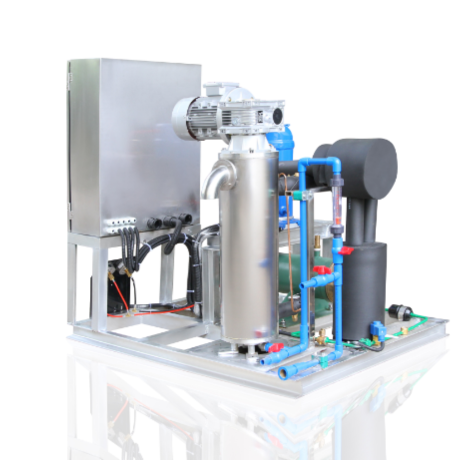
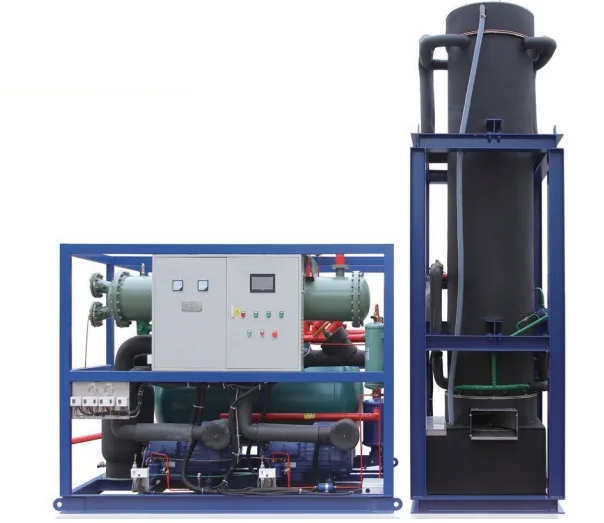
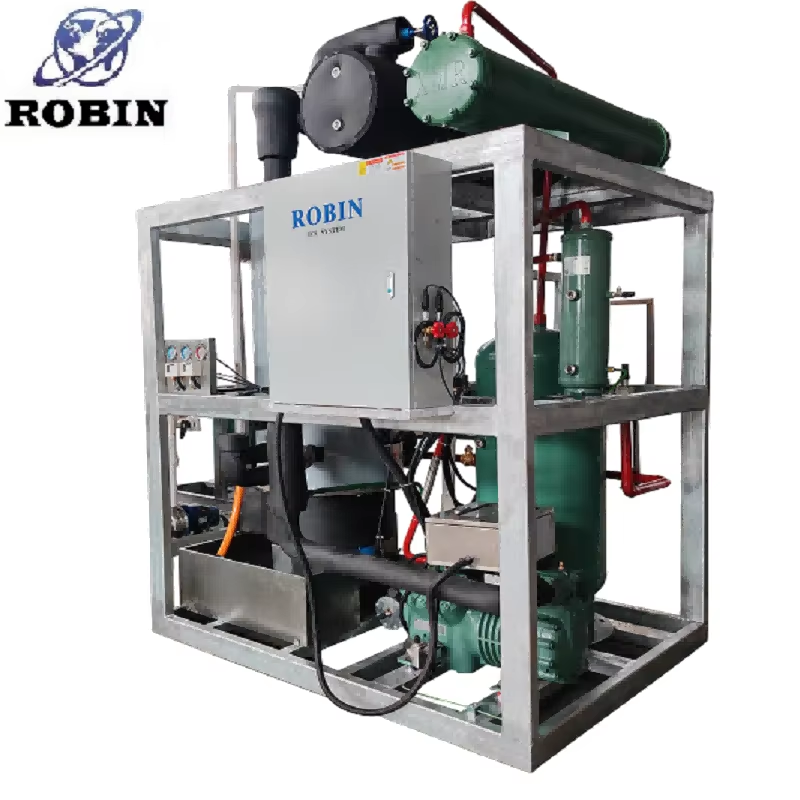
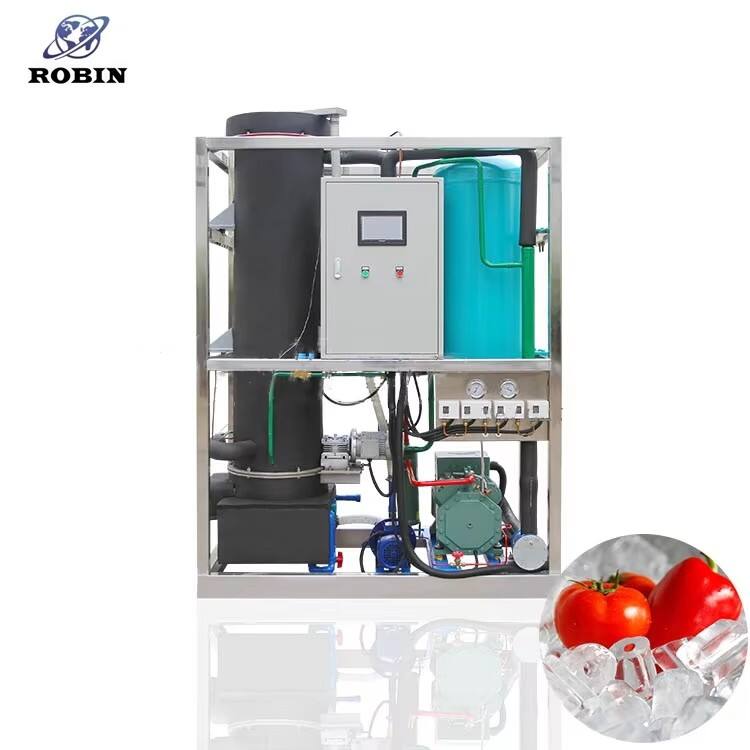
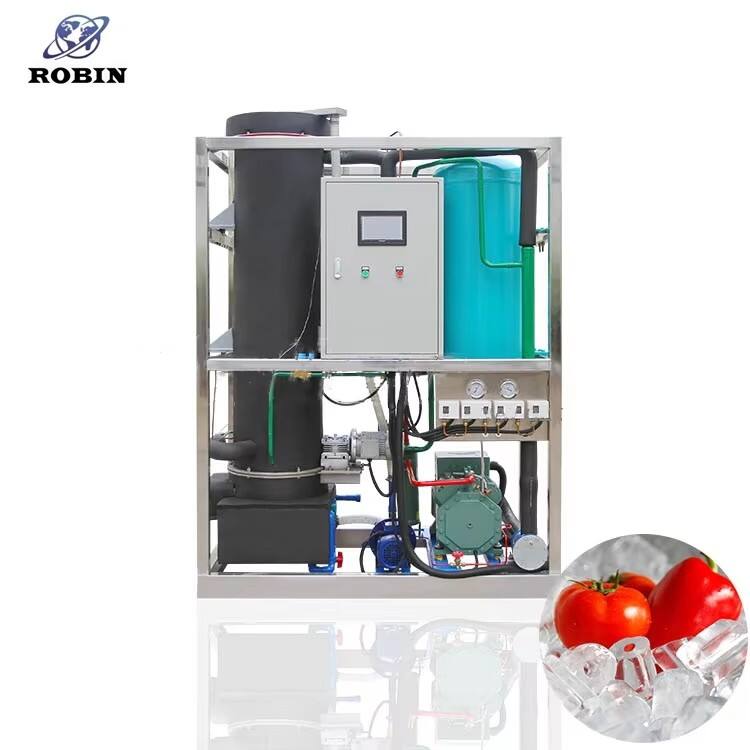
A tube ice machine represents a sophisticated refrigeration system designed to produce cylindrical hollow ice tubes that serve diverse commercial and industrial purposes. This equipment operates through a continuous freezing process where water flows inside vertical evaporator tubes, gradually forming ice layers on the inner walls until reaching the desired thickness. The machine then initiates a harvesting cycle, releasing the formed ice tubes that typically measure between 25mm to 42mm in diameter and 25mm to 50mm in length. Modern tube ice machines incorporate advanced refrigeration technology, utilizing efficient compressors, precision-engineered evaporators, and automated control systems that monitor production cycles, ice thickness, and operational parameters. The production capacity of these machines varies significantly, ranging from small-scale units producing 1 ton per day to large industrial systems capable of generating over 30 tons daily. The hollow cylindrical structure of tube ice provides exceptional cooling efficiency due to its increased surface area compared to solid ice forms, making it particularly effective for rapid temperature reduction applications. These machines feature stainless steel construction in food-contact areas, ensuring hygiene standards and durability in demanding environments. The automated operation minimizes manual intervention, with programmable logic controllers managing the entire production sequence from water intake through ice harvesting. Energy efficiency stands as a critical design consideration, with contemporary models incorporating heat recovery systems and optimized refrigeration cycles that reduce power consumption while maintaining consistent output. The versatility of tube ice machines extends across multiple sectors, including food processing facilities, fisheries, concrete cooling operations, chemical processing plants, and beverage production. Installation flexibility allows for both indoor and outdoor placement, with weather-resistant enclosures available for external installations. Maintenance requirements remain relatively straightforward, with accessible components and clear service protocols that extend equipment longevity and ensure reliable performance throughout the operational lifespan.

Popular Products

Investing in a tube ice machine delivers substantial operational benefits that directly impact your bottom line and service quality. The primary advantage lies in the exceptional cooling performance of tube ice itself - the hollow cylindrical shape creates maximum surface contact with products, accelerating cooling times by up to 40 percent compared to traditional ice forms. This rapid cooling capability translates to better product preservation, reduced spoilage rates, and improved quality retention for perishable goods. The continuous production cycle ensures a steady supply of fresh ice without interruption, eliminating the uncertainty of ice shortages during peak demand periods. Your business gains operational independence, no longer relying on external ice suppliers with their associated delivery delays, price fluctuations, and supply inconsistencies. The automated nature of modern tube ice machines significantly reduces labor costs, as the equipment operates with minimal supervision once programmed. Staff members can focus on core business activities rather than managing ice procurement or manual ice production processes. Energy efficiency represents another compelling advantage, with advanced refrigeration systems consuming less electricity per ton of ice produced compared to older technologies. Many models incorporate heat recovery features that capture waste heat for water preheating or facility heating purposes, further reducing overall energy expenditure. The hygienic production environment ensures ice quality meets stringent food safety standards, with stainless steel components preventing contamination and automated cleaning cycles maintaining sanitary conditions. This quality assurance protects your brand reputation and eliminates health compliance concerns. The compact footprint of tube ice machines optimizes facility space utilization, fitting into areas where larger ice production systems cannot operate effectively. Scalability offers another practical benefit - you can start with a smaller capacity unit and expand production as business demands grow, protecting your initial investment while maintaining flexibility. The durability of commercial tube ice machines ensures long-term reliability, with robust construction withstanding harsh operating conditions and heavy-duty usage patterns. Maintenance costs remain predictable and manageable, with readily available replacement parts and straightforward service procedures that minimize downtime. The versatility of tube ice accommodates diverse applications within a single facility, serving multiple departments or processes with one production system. Financial benefits extend beyond operational savings to include potential revenue generation, as excess ice production can be packaged and sold to nearby businesses or consumers. The return on investment typically materializes within 18 to 36 months, depending on usage intensity and previous ice procurement costs, making this equipment acquisition a sound financial decision for growing enterprises.

Tips And Tricks

Can Ice Tube Machine Improve Cooling Efficiency in Industrial Operations?

04

May

Can Ice Tube Machine Improve Cooling Efficiency in Industrial Operations?

Industrial cooling is one of the most operationally critical and cost-sensitive challenges across manufacturing, food processing, chemical production, and logistics. When facilities struggle with inconsistent temperature control, product spoilage, or...
View More
Is Tube Ice Maker Machine Suitable for High-Capacity Ice Manufacturing?

08

May

Is Tube Ice Maker Machine Suitable for High-Capacity Ice Manufacturing?

When industrial buyers and plant managers evaluate large-scale ice production systems, one question consistently surfaces: is a tube ice maker machine genuinely capable of meeting high-capacity manufacturing demands? The answer is not simply yes or n...
View More
How Is Ice Tube Machine Used in Commercial Beverage and Food Industries?

06

May

How Is Ice Tube Machine Used in Commercial Beverage and Food Industries?

The ice tube machine has become an essential piece of equipment across a wide range of commercial operations, from busy restaurant kitchens to large-scale food processing facilities. Its ability to produce cylindrical ice in consistent shapes and siz...
View More
Is Flake Ice Machine for Fish Suitable for Commercial Seafood Markets?

18

May

Is Flake Ice Machine for Fish Suitable for Commercial Seafood Markets?

When it comes to preserving freshness and extending the shelf life of seafood products, the choice of ice type and ice-making equipment is far from trivial. Commercial seafood markets operate under strict hygiene standards, high-volume throughput dem...
View More

Get a Free Quote

Our representative will contact you soon.
Email
Name
Company Name
Message
0/1000

tube ice machine

Advanced Evaporator Technology for Consistent Ice Quality

Advanced Evaporator Technology for Consistent Ice Quality

The evaporator system forms the technological heart of any tube ice machine, and modern designs incorporate breakthrough engineering that revolutionizes ice production efficiency and consistency. These evaporators consist of precision-manufactured vertical tubes, typically constructed from high-grade stainless steel or specialized alloys that resist corrosion while maximizing thermal conductivity. The refrigerant circulates through the outer jacket surrounding these tubes, creating an intensely cold surface that initiates the freezing process. Water flows continuously through the interior of each tube, with carefully calibrated flow rates ensuring uniform ice formation across all tubes simultaneously. The engineering brilliance lies in the controlled freezing progression - ice forms from the tube wall inward, creating the characteristic hollow center that defines tube ice. Thickness sensors monitor ice development in real-time, triggering the harvest cycle precisely when optimal dimensions are achieved. This automated monitoring eliminates the guesswork and inconsistency associated with manual ice production methods. The harvesting mechanism represents another technological achievement, utilizing hot gas defrost systems that briefly warm the evaporator surface, releasing the ice tubes cleanly without damage or fragmentation. This gentle release process preserves ice integrity, producing tubes with smooth surfaces and uniform dimensions that stack efficiently and melt predictably. The evaporator design also incorporates self-cleaning features, with periodic flushing cycles removing mineral deposits and impurities that could compromise ice quality or reduce production efficiency. Advanced models include multi-circuit evaporators that maintain production even during partial system maintenance, ensuring continuous ice availability for critical operations. The thermal efficiency of modern evaporators significantly reduces the energy required per kilogram of ice produced, with some systems achieving energy consumption rates 30 percent lower than previous generation equipment. This efficiency stems from optimized refrigerant flow patterns, enhanced surface treatments that improve heat transfer, and insulation technologies that minimize thermal losses. The modular construction of contemporary evaporator systems facilitates maintenance and component replacement, with individual tube sections accessible without complete system disassembly. This serviceability extends equipment lifespan and reduces maintenance costs over the operational lifetime. The evaporator technology also adapts to varying water quality conditions, with corrosion-resistant materials and protective coatings ensuring reliable performance even with challenging water chemistry. Temperature control precision within the evaporator maintains ice quality consistency regardless of ambient conditions or production load variations, delivering predictable results that businesses can depend upon for their operational planning.
Intelligent Control Systems for Optimized Performance

Intelligent Control Systems for Optimized Performance

Contemporary tube ice machines integrate sophisticated control systems that transform ice production from a mechanical process into an intelligent, self-optimizing operation. These control platforms utilize programmable logic controllers equipped with advanced algorithms that continuously monitor dozens of operational parameters, making real-time adjustments that maximize efficiency while ensuring consistent output quality. The control interface provides operators with intuitive touchscreen displays that present production data, system status, and diagnostic information in easily understood formats, eliminating the technical expertise traditionally required for ice machine operation. Automated production scheduling allows businesses to program ice production cycles around electricity rate structures, running equipment during off-peak hours when energy costs are lowest, then storing ice for use during expensive peak demand periods. This intelligent scheduling can reduce energy expenses by 25 to 40 percent in facilities with time-of-use electricity pricing. The control system also manages water quality parameters, monitoring conductivity and adjusting purge cycles to prevent mineral buildup that could compromise ice quality or damage equipment components. Predictive maintenance capabilities represent a transformative feature, with sensors detecting subtle performance changes that indicate developing issues before they cause equipment failure. The system alerts maintenance personnel to specific components requiring attention, often identifying problems weeks before they would become apparent through traditional monitoring methods. This predictive approach minimizes unexpected downtime and extends equipment lifespan by addressing wear patterns proactively. Remote monitoring capabilities enable facility managers to oversee ice production from any location with internet connectivity, receiving alerts about production status, maintenance needs, or operational anomalies via smartphone or computer. This connectivity proves invaluable for multi-site operations or facilities with limited on-site technical staff. The control system also optimizes refrigeration cycles based on ambient temperature conditions, adjusting compressor operation and refrigerant flow to maintain efficiency across varying environmental conditions. Energy consumption tracking provides detailed analytics about operational costs, helping businesses identify optimization opportunities and justify equipment investments through documented savings. Safety features embedded within the control system protect both equipment and personnel, with automatic shutdown protocols activating when sensors detect abnormal conditions such as refrigerant leaks, water supply interruptions, or electrical anomalies. The system maintains comprehensive operational logs that document production volumes, cycle times, maintenance activities, and system performance metrics, creating valuable data for regulatory compliance, warranty claims, and operational analysis. Integration capabilities allow the control system to communicate with building management systems, coordinating ice production with overall facility operations for enhanced efficiency. User access controls ensure that critical settings remain protected while allowing operators appropriate access levels for routine monitoring and basic adjustments.
Versatile Applications Across Multiple Industries

Versatile Applications Across Multiple Industries

The adaptability of tube ice machines positions them as essential equipment across an remarkably diverse range of industries, each leveraging the unique properties of tube ice for specific operational requirements. In the seafood and fishing industry, tube ice machines provide the rapid cooling necessary to preserve catch quality from boat to market. The hollow cylindrical structure allows seawater or freshwater to flow through the ice, creating a slurry that surrounds fish completely, cooling them faster than solid ice while minimizing physical damage to delicate flesh. Processing facilities use tube ice for temperature control during filleting, packaging, and transportation, with the ice maintaining product temperatures within the critical range that prevents bacterial growth while preserving texture and flavor. Concrete production represents another major application sector, where tube ice machines supply the cooling capacity needed for mass concrete pours in large construction projects. Adding tube ice to concrete mixes reduces the initial temperature of the mixture, slowing the hydration reaction and preventing thermal cracking in massive structures like dams, bridges, and high-rise foundations. The uniform size and shape of tube ice ensures consistent cooling throughout the concrete mass, with predictable melting rates that construction engineers can incorporate into their thermal management calculations. Food processing facilities utilize tube ice machines for various applications including vegetable cooling after blanching, meat processing temperature control, and bakery ingredient chilling. The food-grade ice production meets strict hygiene standards while providing the cooling capacity necessary for maintaining product safety and quality throughout processing operations. Chemical and pharmaceutical manufacturing operations employ tube ice for process cooling, reaction temperature control, and product stabilization during production and packaging. The clean, contaminant-free ice produced by modern machines meets the purity requirements of these regulated industries. Beverage production facilities integrate tube ice machines into their operations for product cooling, fermentation temperature control, and packaging line applications. The ice quality ensures that no off-flavors or contaminants compromise product taste or safety. Retail applications include supermarkets, fish markets, and produce displays where tube ice creates attractive, effective product presentations while maintaining optimal storage temperatures. The ice drains well, preventing water accumulation that could damage packaging or create unsanitary conditions. Healthcare facilities use tube ice for therapeutic applications, laboratory sample preservation, and cafeteria services, with the hygienic production process meeting medical facility standards. Mining operations in remote locations install tube ice machines to provide cooling for personnel facilities and equipment, with the robust construction withstanding harsh environmental conditions. Agricultural applications include produce cooling immediately after harvest, extending shelf life and maintaining quality during transportation to distribution centers. The versatility extends to emergency response scenarios, where mobile tube ice machines provide critical cooling capacity for disaster relief operations, temporary medical facilities, and food preservation in areas with compromised infrastructure.


Get a Free Quote

Our representative will contact you soon.
Email
Name
Company Name
Message
0/1000