
 EN


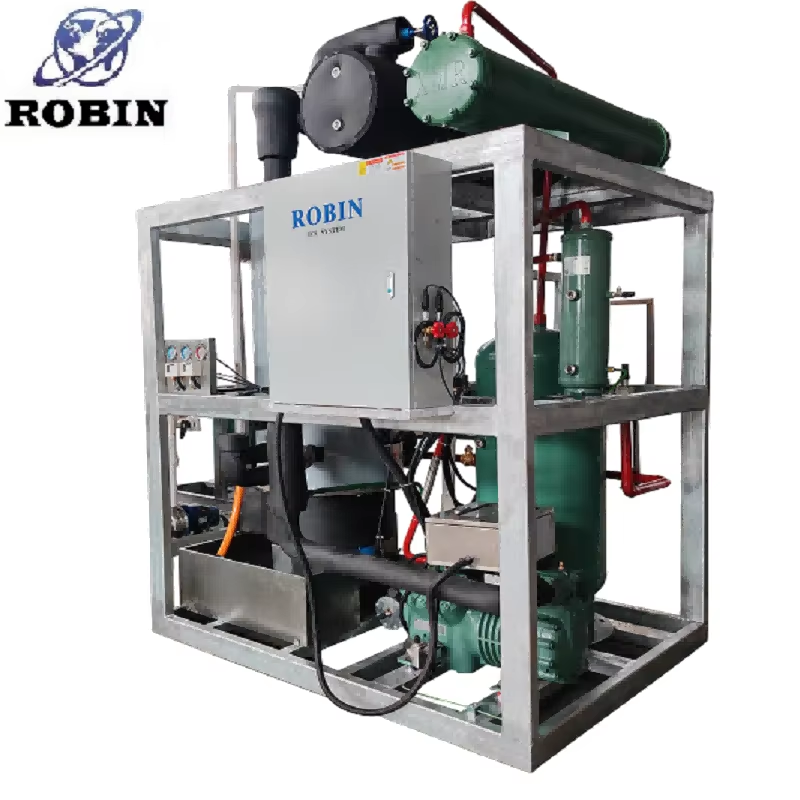
When industrial buyers and plant managers evaluate large-scale ice production systems, one question consistently surfaces: is a tube ice maker machine genuinely capable of meeting high-capacity manufacturing demands? The answer is not simply yes or no — it depends on understanding how this technology is engineered, what operational conditions it thrives in, and where its design advantages align with the realities of bulk ice production. For businesses that require consistent, large-volume ice output day after day, choosing the right ice-making system is a critical infrastructure decision.
A tube ice maker machine produces hollow cylindrical ice pieces that are dense, slow-melting, and structurally uniform. These characteristics make it a compelling candidate for high-capacity applications across food processing, fisheries, concrete cooling, chemical processing, and beverage industries. But suitability for high-capacity manufacturing goes beyond ice shape — it involves production efficiency, energy consumption, mechanical reliability, and the ability to scale output without compromising quality. This article examines each of these dimensions to give industrial decision-makers a clear, grounded answer.
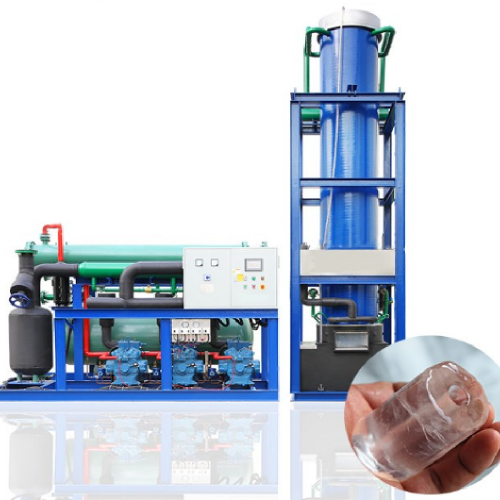
Understanding the Design of a Tube Ice Maker Machine
Core Mechanical Architecture
A tube ice maker machine operates on a vertical evaporator principle. Water is distributed over the inner surface of vertical tubes, where it freezes progressively from the outside inward, forming a hollow cylindrical ice tube. Once the ice reaches the desired wall thickness, a hot gas defrost cycle releases the tubes, which are then cut into uniform lengths by a rotating cutter. This process is continuous and highly automated, which is a foundational advantage for high-capacity operations.
The mechanical design of a tube ice maker machine is inherently suited to scale. Because the evaporator tubes are modular and the refrigeration cycle is continuous rather than batch-based, manufacturers can engineer systems that produce anywhere from a few hundred kilograms to 30 tons or more per day within a single unit. This scalability is one of the primary reasons the tube ice maker machine is considered a serious contender for industrial-scale ice manufacturing.
The cutting mechanism is equally important. Precise cutter settings allow operators to produce ice tubes of consistent length, which matters in industries where ice-to-product contact ratios are critical. Uniformity at scale is not a given in all ice-making technologies, but the tube ice maker machine delivers it reliably through its mechanical design.
Refrigeration System Integration
High-capacity ice production places significant demands on the refrigeration system. A tube ice maker machine designed for industrial output typically integrates with ammonia or Freon-based refrigeration circuits, depending on the scale and regulatory environment of the facility. Ammonia systems are common in large-scale plants due to their thermodynamic efficiency and lower long-term operating costs, while Freon systems offer easier compliance in certain regions.
The refrigeration cycle in a tube ice maker machine is optimized for continuous operation. Unlike batch systems that require full defrost and restart cycles, the tube ice maker machine maintains a near-constant thermal load on the compressor, which reduces mechanical stress and improves energy efficiency over long production runs. For facilities running 20 to 24 hours per day, this operational continuity translates directly into higher output reliability.
Capacity Benchmarks and Scalability
What High-Capacity Actually Means in Practice
In industrial ice manufacturing, high-capacity typically refers to daily output volumes ranging from 10 tons to over 100 tons per day. A single tube ice maker machine unit can realistically achieve outputs of 10, 20, or 30 tons per day depending on its evaporator size, compressor rating, and ambient operating conditions. For facilities requiring output beyond a single unit's ceiling, multiple tube ice maker machine units can be installed in parallel, sharing storage and distribution infrastructure.
This modular scalability is a significant operational advantage. Rather than investing in one oversized system that creates a single point of failure, plant operators can deploy two or three tube ice maker machine units to achieve the same total output with built-in redundancy. If one unit requires maintenance, production continues on the remaining units, which is a critical consideration for industries where ice supply interruption has direct financial consequences.
It is also worth noting that the rated capacity of a tube ice maker machine is typically specified at a standard ambient temperature, often around 20°C water inlet and 33°C ambient air. In hotter climates or during peak summer months, actual output may be 10 to 15 percent lower than the nameplate rating. Buyers planning high-capacity installations should account for this when sizing their systems.
Comparing Output Consistency Across Operating Conditions
One of the defining strengths of a tube ice maker machine in high-capacity contexts is its output consistency. Because the freezing process is governed by a controlled water flow rate and a stable refrigeration cycle, the machine produces ice at a predictable rate once it reaches steady-state operation. This predictability is essential for downstream processes that depend on a continuous ice supply, such as fish packing lines or concrete batching plants.
Fluctuations in ambient temperature, water quality, and electrical supply can affect output, but a well-engineered tube ice maker machine includes control systems that compensate for these variables. Modern units feature programmable logic controllers that monitor evaporator pressure, water distribution, and defrost timing to maintain optimal production rates. This level of automation supports high-capacity manufacturing without requiring constant manual intervention.
Energy Efficiency at Industrial Scale
Power Consumption Relative to Output
Energy cost is one of the most significant operating expenses in high-capacity ice manufacturing. A tube ice maker machine is generally recognized for its favorable energy-to-output ratio compared to flake or block ice systems of equivalent capacity. The hollow tube design requires less refrigeration energy per kilogram of ice produced because the thin-walled structure freezes faster and releases more efficiently during the defrost cycle.
For a 30-ton-per-day tube ice maker machine, typical power consumption ranges from approximately 55 to 75 kilowatt-hours per ton of ice, depending on the refrigerant used, compressor efficiency, and ambient conditions. Over a full year of operation, even a modest improvement in energy efficiency per ton translates into substantial cost savings at industrial scale. This makes the tube ice maker machine an economically attractive choice for high-volume producers who are sensitive to operating margins.
Heat recovery is another energy consideration. In large installations, the condenser heat rejected by a tube ice maker machine can be captured and redirected for facility heating or water preheating, further improving the overall energy balance of the plant. This integration potential is more feasible at high-capacity scales where the thermal volumes justify the additional infrastructure investment.
Maintenance Load and Operational Uptime
High-capacity manufacturing demands high uptime. A tube ice maker machine is designed with this requirement in mind. The evaporator tubes are resistant to scaling when water treatment protocols are followed, and the cutting mechanism requires only periodic blade inspection and replacement. Compared to plate or flake ice systems, the tube ice maker machine has fewer moving parts in direct contact with the ice, which reduces wear-related downtime.
Preventive maintenance schedules for a tube ice maker machine typically include monthly inspection of water distribution nozzles, quarterly checks of refrigerant charge and compressor oil levels, and annual evaporator cleaning. When these protocols are followed, industrial-grade tube ice maker machine units routinely achieve operational lifespans of 15 to 20 years, making them a sound long-term capital investment for high-capacity facilities.
Industry Applications That Validate High-Capacity Suitability
Fisheries and Seafood Processing
The fisheries sector is one of the most demanding environments for ice production. Vessels and processing plants require large volumes of ice that can preserve catch quality for extended periods without crushing delicate fish tissue. A tube ice maker machine produces ice with a hollow core and smooth surface that contacts seafood gently while providing excellent thermal mass. At high-capacity scales, tube ice is delivered continuously to packing lines, ensuring that processing throughput is never limited by ice availability.
Large fishing ports and seafood export facilities routinely operate tube ice maker machine installations in the 20 to 50 ton per day range. The combination of ice quality, production consistency, and hygienic design — stainless steel contact surfaces and enclosed water circuits — makes the tube ice maker machine the preferred choice in this sector.
Concrete Cooling and Construction
In large-scale construction projects, particularly in hot climates, concrete must be cooled during mixing to prevent premature hydration and ensure structural integrity. A tube ice maker machine is widely used in this application because tube ice can be fed directly into concrete mixers, where it melts uniformly and distributes cooling effect evenly throughout the mix. High-capacity tube ice maker machine installations at construction sites can produce 30 tons or more per day to support continuous concrete pouring operations.
The durability of tube ice — its slow melt rate and resistance to clumping — is particularly valuable in this context. Ice that melts too quickly or clumps in storage cannot be metered accurately into the mixer, which compromises the cooling calculation. The tube ice maker machine's consistent output geometry solves this problem at any production scale.
Chemical and Industrial Process Cooling
Chemical processing plants, pharmaceutical manufacturers, and food ingredient producers often require large volumes of ice for process temperature control. A tube ice maker machine integrated into these facilities provides a reliable, on-site ice supply that eliminates dependence on external ice delivery, which can be unreliable and costly at high volumes. The tube ice maker machine's ability to operate continuously and deliver ice directly to process points via conveyors or pneumatic systems makes it well-suited to these demanding industrial environments.
Conditions Where a Tube Ice Maker Machine Performs Best at High Capacity
Facility and Infrastructure Requirements
To realize the full high-capacity potential of a tube ice maker machine, the host facility must meet certain infrastructure requirements. Adequate electrical supply — typically three-phase power at the appropriate voltage for the compressor rating — is essential. Water supply quality also matters: high mineral content or suspended solids can accelerate scaling in the evaporator tubes, reducing heat transfer efficiency and increasing maintenance frequency. A water treatment system upstream of the tube ice maker machine is a standard recommendation for high-capacity installations.
Cold storage capacity must be matched to the tube ice maker machine's output rate. If storage is undersized, the machine must be cycled on and off to prevent overflow, which reduces efficiency and increases mechanical wear. Properly sized insulated storage bins or silos allow the tube ice maker machine to run at its optimal continuous rate, maximizing both output and equipment longevity.
Operator Training and Process Integration
A tube ice maker machine at high-capacity scale is a sophisticated piece of industrial equipment. Operators need to understand the refrigeration cycle, water distribution system, and control logic to respond effectively to alarms and optimize production parameters. Facilities that invest in operator training consistently achieve higher uptime and better energy efficiency from their tube ice maker machine installations.
Integration with downstream processes — whether packing lines, concrete mixers, or chemical reactors — requires careful planning of ice conveyance, storage, and metering systems. When the tube ice maker machine is treated as a core component of the production process rather than a standalone utility, its contribution to overall plant efficiency is maximized.
FAQ
What is the maximum daily output a single tube ice maker machine can achieve?
A single tube ice maker machine unit can produce up to 30 tons of ice per day in standard industrial configurations. For higher output requirements, multiple units can be installed in parallel to achieve combined capacities well beyond this figure while maintaining operational redundancy.
How does a tube ice maker machine compare to flake ice machines for high-capacity use?
A tube ice maker machine produces denser, slower-melting ice that is better suited for applications requiring extended cooling duration, such as seafood preservation and concrete cooling. Flake ice melts faster and is preferred for direct product contact in certain food applications. For high-capacity industrial manufacturing where ice longevity and structural integrity matter, the tube ice maker machine generally offers superior performance.
Does ambient temperature significantly affect the output of a tube ice maker machine?
Yes, ambient temperature affects the condenser's ability to reject heat, which in turn influences the refrigeration cycle efficiency. In high-temperature environments, a tube ice maker machine may produce 10 to 15 percent less ice than its rated capacity. Proper system sizing should account for the worst-case ambient conditions at the installation site to ensure production targets are consistently met.
Is a tube ice maker machine suitable for continuous 24-hour operation in industrial plants?
A tube ice maker machine is specifically designed for continuous operation. Its automated defrost cycle, programmable control system, and robust refrigeration components allow it to run around the clock with minimal manual intervention. Industrial-grade units are built to sustain this operational intensity for many years when maintained according to the manufacturer's recommended schedule.
Table of Contents
- Understanding the Design of a Tube Ice Maker Machine
- Capacity Benchmarks and Scalability
- Energy Efficiency at Industrial Scale
- Industry Applications That Validate High-Capacity Suitability
- Conditions Where a Tube Ice Maker Machine Performs Best at High Capacity
-
FAQ
- What is the maximum daily output a single tube ice maker machine can achieve?
- How does a tube ice maker machine compare to flake ice machines for high-capacity use?
- Does ambient temperature significantly affect the output of a tube ice maker machine?
- Is a tube ice maker machine suitable for continuous 24-hour operation in industrial plants?