Industrial Ice Block Making Machine - High-Capacity Commercial Ice Production Systems

Get a Free Quote

Our representative will contact you soon.
Email
Name
Company Name
Message
0/1000

industrial ice block making machine

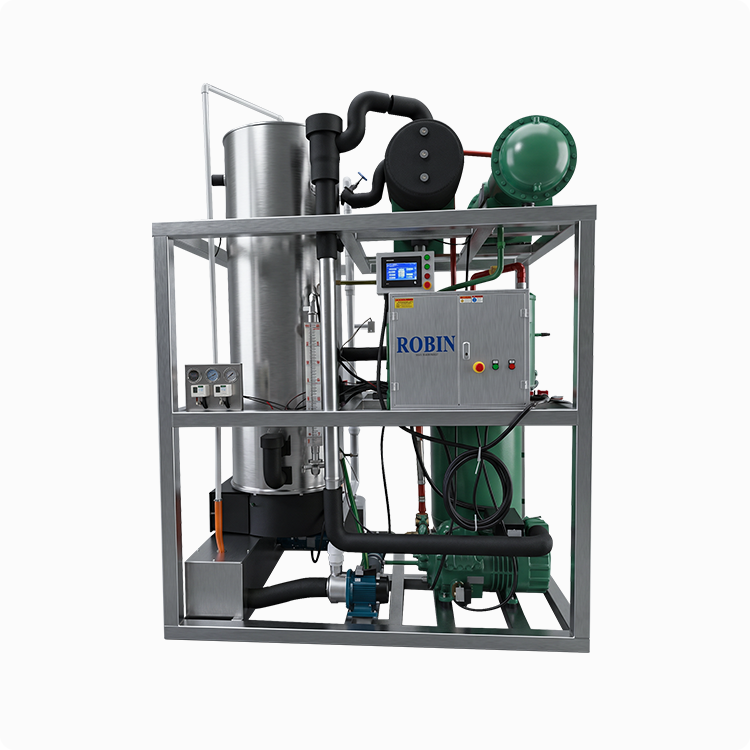
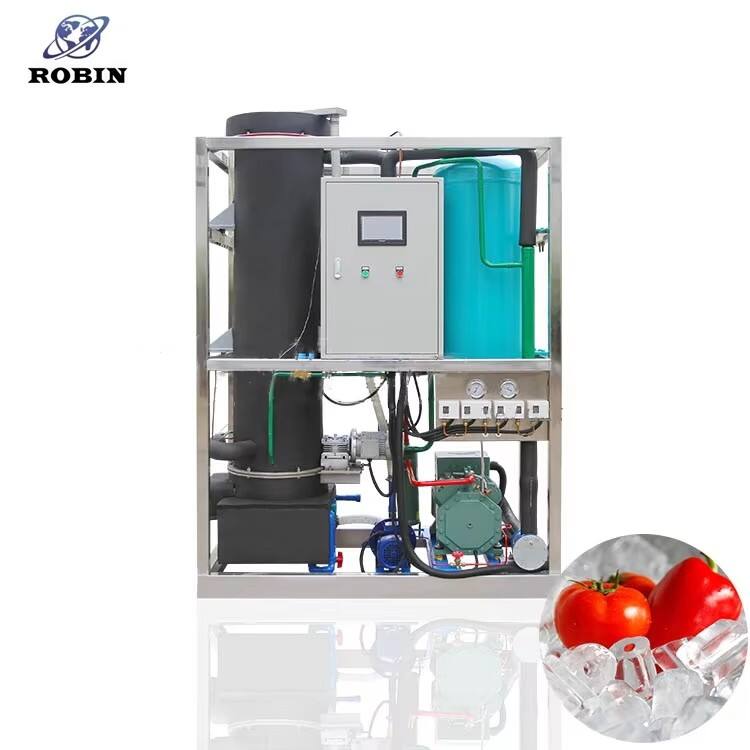
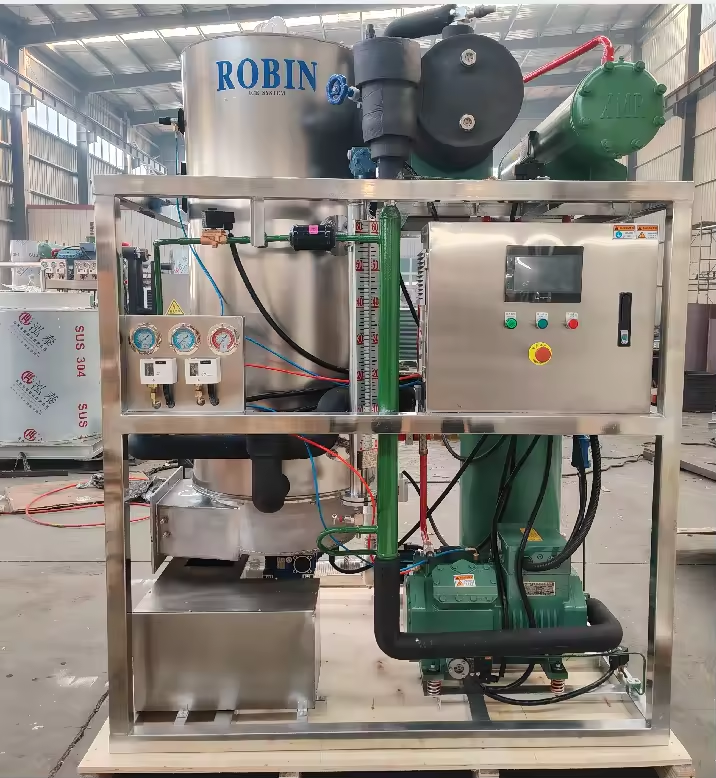
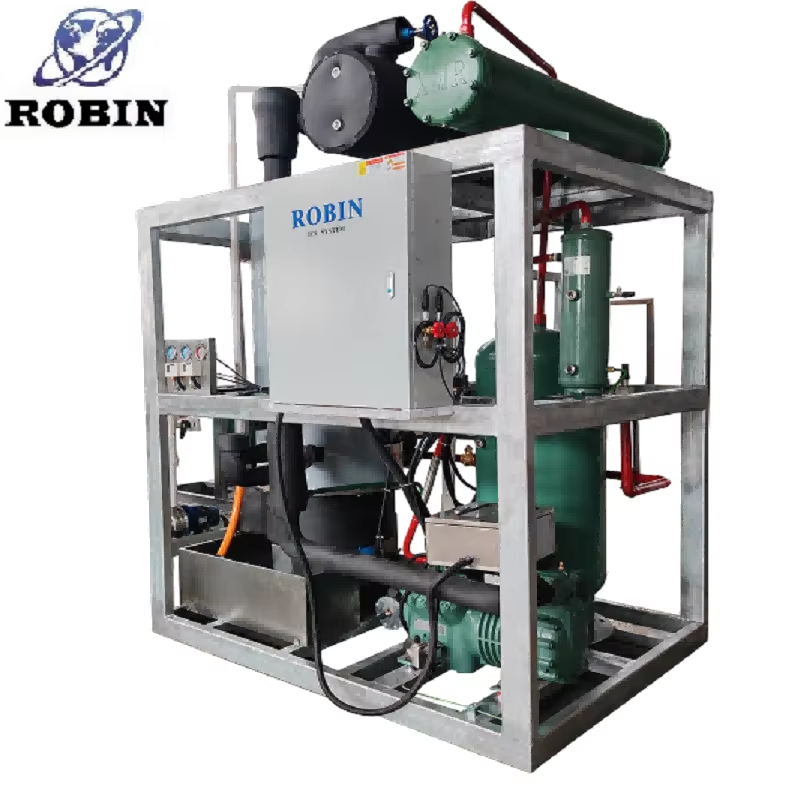
An industrial ice block making machine represents a sophisticated refrigeration system designed to produce large-scale ice blocks for commercial and industrial purposes. These robust machines transform water into solid ice blocks through advanced freezing technology, serving businesses that require substantial ice production capacity. The primary function centers on creating uniform ice blocks ranging from 5kg to 150kg per block, depending on the specific model and configuration. Modern industrial ice block making machines incorporate automated water filling systems, precise temperature control mechanisms, and efficient refrigeration cycles that ensure consistent ice quality. The technological framework relies on direct refrigeration methods where refrigerant circulates through aluminum or stainless steel cans submerged in brine solution, creating optimal freezing conditions. These machines feature programmable logic controllers that monitor and adjust freezing parameters automatically, reducing manual intervention while maximizing production efficiency. The core components include high-performance compressors, evaporators, condensers, and insulated ice storage chambers that maintain product integrity. Applications span diverse industries including fisheries, food processing, concrete cooling, chemical processing, and hospitality sectors. Fishing vessels and seafood processing facilities depend on these machines to preserve catches during transportation and storage. Construction companies utilize ice blocks for concrete temperature management in hot climates, preventing premature curing and structural weaknesses. Food manufacturers integrate these systems into their cold chain infrastructure, ensuring product safety and extending shelf life. The machines operate continuously in demanding environments, built with corrosion-resistant materials that withstand harsh conditions. Energy efficiency remains a critical design consideration, with modern units incorporating heat recovery systems and variable speed compressors that reduce operational costs. Production capacity varies significantly, with industrial models generating between 1 ton to 100 tons of ice daily, accommodating businesses of different scales. The ice block making process typically requires 8 to 24 hours per cycle, depending on block size and ambient conditions, with automated harvesting mechanisms that streamline operations and minimize labor requirements.

New Product Recommendations

Industrial ice block making machines deliver substantial cost savings through efficient production methods that eliminate dependence on external ice suppliers. Businesses gain complete control over their ice supply, avoiding price fluctuations and delivery uncertainties that disrupt operations. The machines produce ice at a fraction of the cost compared to purchasing from vendors, with payback periods typically ranging from 12 to 24 months depending on usage volume. Energy-efficient designs incorporate advanced insulation and optimized refrigeration cycles that minimize electricity consumption while maintaining high output levels. Automated operation reduces labor costs significantly, as modern systems require minimal supervision once programmed and initiated. The machines run continuously without constant monitoring, freeing staff to focus on core business activities rather than ice management tasks. Reliability stands as a fundamental advantage, with industrial-grade components engineered for extended operational lifespans exceeding 15 years with proper maintenance. Consistent ice quality ensures businesses meet strict hygiene and safety standards, particularly crucial for food-related applications where contamination risks must be eliminated. The uniform block sizes facilitate easier handling, storage, and transportation compared to irregular ice forms, improving logistics efficiency throughout the supply chain. Scalability allows businesses to adjust production capacity by adding modules or upgrading systems as demand grows, protecting initial investments while accommodating expansion. Space efficiency characterizes modern designs, with vertical configurations and compact footprints that maximize production capacity within limited floor areas. The machines adapt to various water sources, incorporating filtration systems that purify input water and produce crystal-clear ice blocks that enhance product presentation. Temperature precision ensures ice reaches optimal hardness levels, preventing premature melting during storage and distribution phases. Maintenance requirements remain straightforward, with accessible components and standardized parts that simplify servicing and reduce downtime. Environmental benefits emerge through reduced transportation emissions, as on-site production eliminates the need for ice delivery trucks making frequent trips. The systems support sustainability initiatives by enabling businesses to implement closed-loop water systems that recycle meltwater back into production cycles. Flexibility in block sizing accommodates diverse customer requirements, from small retail portions to massive industrial blocks weighing over 100 kilograms. Quick installation processes minimize business disruption, with most systems becoming operational within days of delivery. Remote monitoring capabilities in advanced models allow operators to track performance metrics, receive maintenance alerts, and optimize settings from mobile devices. The machines withstand extreme ambient temperatures, functioning reliably in tropical heat or cold storage environments without performance degradation. Hygiene standards are easily maintained through stainless steel construction and automated cleaning cycles that prevent bacterial growth and ensure food-grade ice production.

Practical Tips

How Is Ice Tube Machine Used in Commercial Beverage and Food Industries?

06

May

How Is Ice Tube Machine Used in Commercial Beverage and Food Industries?

The ice tube machine has become an essential piece of equipment across a wide range of commercial operations, from busy restaurant kitchens to large-scale food processing facilities. Its ability to produce cylindrical ice in consistent shapes and siz...
View More
How Does Tube Ice Maker Machine Support Hygienic Ice Supply Operations?

12

May

How Does Tube Ice Maker Machine Support Hygienic Ice Supply Operations?

In food processing, healthcare, fisheries, and beverage production, the integrity of ice directly affects product safety and regulatory compliance. A tube ice maker machine is engineered from the ground up to meet the demanding hygiene standards that...
View More
Can Tube Ice Maker Machine Improve Ice Production in Commercial Facilities?

14

May

Can Tube Ice Maker Machine Improve Ice Production in Commercial Facilities?

Commercial facilities that rely on consistent, high-volume ice supply face ongoing pressure to meet demand efficiently without sacrificing quality or operational reliability. Whether the context is food processing, beverages, fisheries, chemical cool...
View More
How Does Flake Ice Machine for Fish Support Aquaculture Cold Storage Needs?

20

May

How Does Flake Ice Machine for Fish Support Aquaculture Cold Storage Needs?

Aquaculture operations depend on precise temperature control at every stage of the supply chain, from harvest tanks to processing floors to distribution centers. A flake ice machine for fish sits at the center of this cold chain, producing thin, flat...
View More

Get a Free Quote

Our representative will contact you soon.
Email
Name
Company Name
Message
0/1000

industrial ice block making machine

Advanced Refrigeration Technology for Maximum Efficiency

Advanced Refrigeration Technology for Maximum Efficiency

The industrial ice block making machine employs cutting-edge refrigeration technology that sets new standards for energy efficiency and production reliability. At the heart of this system lies a sophisticated direct refrigeration method where high-grade refrigerant circulates through precision-engineered aluminum or stainless steel cans immersed in a carefully maintained brine solution. This configuration creates an optimal thermal exchange environment that accelerates freezing while consuming minimal energy. The compressor units utilize variable speed technology that adjusts cooling capacity based on real-time demand, preventing energy waste during partial load conditions. Heat recovery systems capture thermal energy expelled during the refrigeration cycle, redirecting it for water preheating or facility heating purposes, further reducing overall energy consumption. The evaporator design maximizes surface contact area, enhancing heat transfer efficiency and shortening freezing cycles without compromising ice quality. Intelligent defrost systems activate only when necessary, using precise sensors that detect frost accumulation and initiate targeted defrosting that minimizes production interruptions. The brine solution maintains consistent sub-zero temperatures through continuous circulation, ensuring uniform freezing across all ice cans regardless of their position within the tank. Advanced insulation materials with superior thermal resistance properties envelop critical components, preventing heat infiltration and maintaining stable internal temperatures even in challenging ambient conditions. The refrigeration cycle incorporates multiple safety mechanisms including pressure relief valves, temperature limiters, and automatic shutdown protocols that protect equipment from damage while ensuring operator safety. Programmable logic controllers orchestrate the entire refrigeration process, monitoring dozens of parameters simultaneously and making micro-adjustments that optimize performance without human intervention. The system adapts to seasonal temperature variations, automatically compensating for ambient heat loads and maintaining consistent production output year-round. Refrigerant selection prioritizes environmental responsibility, with modern machines using eco-friendly alternatives that minimize ozone depletion potential and global warming impact. The closed-loop refrigeration design prevents refrigerant leaks, maintaining system efficiency while complying with environmental regulations. Maintenance accessibility remains a priority, with modular component arrangements that allow technicians to service or replace parts without dismantling entire systems. Diagnostic interfaces provide real-time performance data, enabling predictive maintenance strategies that address potential issues before they cause failures. The refrigeration technology delivers exceptional coefficient of performance ratios, converting electrical input into cooling output with minimal losses, making these machines among the most economical ice production solutions available in the industrial market.
Automated Production Control for Consistent Quality

Automated Production Control for Consistent Quality

Automation represents a transformative feature of the industrial ice block making machine, eliminating manual processes that introduce variability and inefficiency into ice production. The automated water filling system precisely measures and distributes water into each ice can, ensuring uniform block sizes and preventing overfilling that wastes resources or underfilling that reduces output. Sensors monitor water levels continuously, triggering refills at optimal moments and maintaining consistent production cycles without operator intervention. The freezing process follows programmed parameters that account for block size, ambient temperature, and desired ice hardness, automatically adjusting refrigeration intensity to achieve perfect results every cycle. Harvesting mechanisms activate when ice reaches specified temperature thresholds, using heated water or direct refrigerant injection to release blocks from cans smoothly without damage. Conveyor systems transport harvested blocks to storage areas, eliminating manual handling that poses injury risks and slows production flow. The control interface allows operators to program multiple production profiles, switching between different block sizes or production schedules with simple menu selections. Real-time monitoring displays provide instant visibility into system status, showing current production stage, temperature readings, and performance metrics that enable informed decision-making. Alert systems notify operators of any deviations from normal parameters, from water supply interruptions to refrigeration anomalies, allowing rapid response before issues escalate into costly downtime. The automation extends to cleaning cycles, with scheduled sanitization routines that flush systems with cleaning solutions and rinse thoroughly, maintaining hygiene standards without manual scrubbing. Data logging capabilities record production history, creating detailed records that support quality assurance programs and regulatory compliance documentation. Remote access functionality enables off-site monitoring and control, allowing managers to oversee operations from any location with internet connectivity. The automated systems reduce labor requirements dramatically, with some installations operating continuously with only periodic inspections rather than constant supervision. Error prevention mechanisms validate operator inputs, rejecting commands that could damage equipment or compromise ice quality, protecting investments from human mistakes. Integration capabilities allow the machines to connect with broader facility management systems, coordinating ice production with overall operational schedules and energy management strategies. The automation intelligence learns from operational patterns, suggesting optimization opportunities that improve efficiency over time. Batch tracking features assign unique identifiers to production runs, enabling traceability that proves invaluable for quality investigations or customer inquiries. The automated control systems undergo rigorous testing before deployment, ensuring reliability that businesses depend on for uninterrupted ice supply. User-friendly interfaces require minimal training, with intuitive touchscreen controls and visual guides that make operation accessible to staff with varying technical backgrounds.
Robust Construction for Long-Term Durability

Robust Construction for Long-Term Durability

The industrial ice block making machine features exceptional build quality that ensures decades of reliable service in demanding commercial environments. Structural frameworks utilize heavy-gauge steel with corrosion-resistant coatings that withstand exposure to moisture, salt, and chemical cleaning agents without degradation. Ice cans are fabricated from food-grade aluminum or stainless steel, materials chosen for their superior thermal conductivity, resistance to corrosion, and compliance with health regulations governing food contact surfaces. Welded construction eliminates weak points associated with bolted assemblies, creating monolithic structures that resist vibration, impact, and thermal stress cycles. The brine tank incorporates reinforced walls with multi-layer insulation that maintains temperature stability while preventing external condensation that could damage surrounding infrastructure. Compressor units are industrial-grade models designed for continuous operation, featuring reinforced bearings, oversized cooling fans, and vibration dampening mounts that extend service life beyond 100,000 operating hours. Electrical components meet international safety standards, with weatherproof enclosures protecting sensitive electronics from moisture and dust infiltration. Piping systems use seamless tubing with brazed joints that eliminate leak risks, ensuring refrigerant containment and system efficiency throughout the machine's operational life. The machines undergo pressure testing and quality inspections at multiple production stages, verifying structural integrity before leaving the factory. Protective coatings on external surfaces resist scratches, chemical exposure, and UV degradation, maintaining professional appearance even after years of service. Modular design philosophy allows component replacement without specialized tools or extensive disassembly, reducing maintenance complexity and minimizing downtime during repairs. The construction accounts for thermal expansion, incorporating flexible connections and expansion joints that accommodate temperature-induced dimensional changes without stress fractures. Sealing systems use premium gaskets and O-rings that maintain integrity through thousands of thermal cycles, preventing water or refrigerant leaks. The machines are engineered to withstand transportation stresses, with reinforced mounting points and protective packaging that ensure arrival in perfect condition regardless of shipping distance. Foundation requirements remain minimal due to balanced weight distribution and integrated leveling systems that compensate for uneven floors. The robust construction supports operation in extreme environments, from tropical heat exceeding 40 degrees Celsius to cold storage facilities maintaining sub-zero temperatures. Safety features include emergency stop buttons, protective guards around moving parts, and automatic shutdown systems that activate during abnormal conditions. The build quality reflects manufacturer confidence, typically backed by comprehensive warranties covering major components for multiple years. Standardized component specifications ensure replacement parts remain available throughout the machine's lifespan, protecting against obsolescence that plagues lesser equipment. The construction methodology prioritizes serviceability, with clear component labeling, accessible connection points, and maintenance manuals that guide technicians through procedures. Quality materials and precision manufacturing result in machines that maintain performance specifications year after year, delivering consistent ice production without the efficiency losses that affect poorly constructed alternatives.


Get a Free Quote

Our representative will contact you soon.
Email
Name
Company Name
Message
0/1000