
 EN


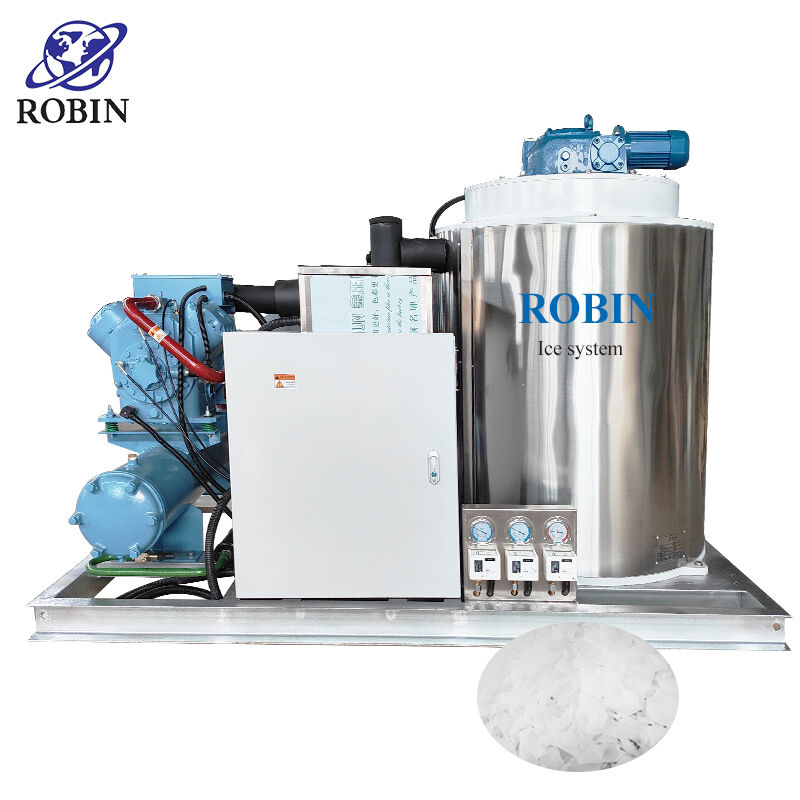
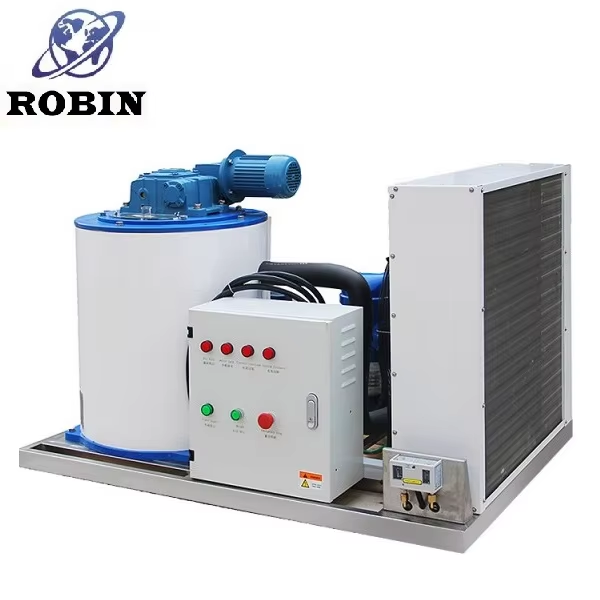
Aquaculture operations depend on precise temperature control at every stage of the supply chain, from harvest tanks to processing floors to distribution centers. A flake ice machine for fish sits at the center of this cold chain, producing thin, flat ice crystals that conform closely to irregular fish surfaces and deliver rapid, uniform chilling. Without a reliable ice supply matched to the biological demands of live and harvested aquatic species, cold storage systems struggle to maintain the narrow temperature windows that preserve product quality and meet food safety standards.
Understanding how a flake ice machine for fish integrates with aquaculture cold storage requires looking beyond the machine itself. It means examining how flake ice behaves in contact with fish tissue, how production capacity aligns with harvest cycles, and how the ice supply chain connects processing, transport, and storage into a coherent refrigeration strategy. This article walks through each of those dimensions to explain why flake ice technology has become the standard choice for serious aquaculture cold storage operations.
The Biological Case for Flake Ice in Aquaculture Cold Storage
How Fish Tissue Responds to Ice Contact
Fish muscle tissue is highly perishable because enzymatic activity and bacterial growth accelerate rapidly once a fish leaves its aquatic environment. The goal of cold storage is to bring core tissue temperature down to near 0°C as quickly as possible and hold it there throughout handling, processing, and transport. A flake ice machine for fish produces ice in thin, flat pieces typically 2 to 3 millimeters thick, which creates a dramatically larger surface area per kilogram of ice compared to block or cube formats.
That increased surface area means more ice-to-fish contact points, which accelerates heat transfer from the fish into the ice. When fish are packed in flake ice, the ice conforms around gills, fins, and body cavities rather than leaving air gaps that act as insulation. This conforming behavior is not cosmetic — it directly determines how fast core temperature drops and how long the fish remains within safe storage parameters.
Research across multiple aquaculture species consistently shows that fish chilled with flake ice reach target storage temperatures faster than those chilled with larger ice formats. For high-value species like salmon, sea bass, and shrimp, that speed difference translates directly into extended shelf life and reduced quality degradation at the point of sale.
Moisture Management and Product Integrity
A flake ice machine for fish produces ice with a dry, low-moisture surface that melts gradually rather than pooling immediately. This controlled melt rate keeps fish surfaces moist enough to prevent dehydration and surface oxidation without submerging product in standing water, which can accelerate bacterial transfer between individual fish.
In aquaculture cold storage environments where fish may be held for 24 to 72 hours before processing or shipment, this moisture balance is critical. Excess water from rapidly melting ice formats can soften skin, leach out natural pigments, and create conditions favorable to spoilage organisms. Flake ice's controlled melt profile avoids these outcomes while still delivering continuous cooling as ambient heat enters the storage space.
For whole fish destined for premium markets, surface appearance is a direct quality signal to buyers. The gentle, conforming contact of flake ice preserves scale integrity and skin color in ways that harder ice formats cannot match, making the flake ice machine for fish a quality management tool as much as a refrigeration tool.
How Flake Ice Machine Capacity Aligns with Aquaculture Harvest Cycles
Matching Ice Output to Harvest Volume
Aquaculture operations are not continuous — they follow biological cycles tied to species growth rates, seasonal conditions, and market demand windows. A flake ice machine for fish must be sized to meet peak harvest demand rather than average daily demand, because the consequences of an ice shortage during a major harvest event are severe and largely irreversible.
Industrial flake ice machines are available in a wide range of daily output capacities, from small units producing one or two tons per day for boutique operations to large-scale systems producing ten tons or more per day for commercial aquaculture facilities. Selecting the right capacity requires mapping the machine's output against the facility's largest expected single-day harvest volume, factoring in ice consumption rates for both chilling and transport packing.
A common planning benchmark in aquaculture cold storage is that approximately one kilogram of flake ice is needed per kilogram of fish for initial chilling, with additional ice required for replenishment during extended storage or transport. A flake ice machine for fish sized below this threshold forces operators to choose between under-icing product or delaying harvest, both of which carry significant economic and quality costs.
Continuous Production and Storage Buffer Capacity
Modern flake ice machines for fish operate continuously, building an ice inventory in insulated storage silos between harvest events. This buffer capacity is essential for aquaculture facilities where harvest timing may shift due to weather, water quality events, or market conditions. Having a stored ice reserve means the cold storage system can respond immediately to an unplanned harvest without waiting for the machine to produce sufficient ice in real time.
Silo capacity planning is as important as machine output capacity. An undersized silo forces the machine to run continuously at full load with no buffer, increasing wear and reducing operational flexibility. A well-designed flake ice machine for fish installation pairs the production unit with a silo sized to hold at least one full day's peak harvest ice requirement, giving the operation a meaningful safety margin.
Automated ice conveyance systems that move flake ice from the silo to packing stations or cold storage rooms without manual handling further improve operational efficiency. These systems reduce labor costs, minimize ice contamination risks, and allow the flake ice machine for fish to serve multiple cold storage zones within a large facility simultaneously.
Integration with Aquaculture Cold Storage Infrastructure
Cold Room Design and Ice Distribution
A flake ice machine for fish does not operate in isolation — it feeds into a broader cold storage infrastructure that includes refrigerated rooms, processing areas, and loading docks. The physical placement of the ice machine relative to these spaces affects both ice quality and operational efficiency. Ice that travels long distances through warm ambient air before reaching fish begins to melt and clump, reducing its effectiveness and creating handling difficulties.
Best practice in aquaculture cold storage design positions the flake ice machine for fish adjacent to or within the primary processing and packing area, with insulated conveyance lines connecting to secondary storage zones. This layout minimizes ice transit time and temperature gain, ensuring that the ice reaching the fish is still in optimal condition for rapid chilling.
Cold room temperature management must also account for the latent heat released as ice melts during the chilling process. Refrigeration system designers working with flake ice machine for fish installations need to factor this heat load into room cooling capacity calculations to prevent gradual temperature rise during high-volume packing operations.
Water Quality and Machine Performance
The quality of water fed into a flake ice machine for fish directly affects both ice quality and machine longevity. Hard water with high mineral content causes scale buildup on evaporator surfaces, reducing heat transfer efficiency and increasing energy consumption over time. Water treatment systems including filtration, softening, and in some cases UV sterilization are standard components of a well-maintained flake ice machine for fish installation in aquaculture settings.
Food-grade ice production requires that the water supply meet potable water standards, as the ice will come into direct contact with fish intended for human consumption. Aquaculture facilities operating under food safety certification programs must document water quality testing as part of their ice production records, making water treatment infrastructure a compliance requirement as well as a performance consideration.
Regular maintenance schedules for the flake ice machine for fish — including evaporator cleaning, refrigerant system checks, and mechanical component inspections — are essential for sustaining consistent ice quality and production capacity across the demanding operational cycles typical of commercial aquaculture.
Economic and Operational Benefits for Aquaculture Businesses
Reducing Post-Harvest Losses
Post-harvest losses in aquaculture represent one of the most significant sources of economic waste in the industry. Fish that spoil before reaching market, or that arrive in degraded condition and sell at a discount, erode margins that are already under pressure from feed costs, energy costs, and market price volatility. A properly sized and maintained flake ice machine for fish directly reduces these losses by ensuring that chilling begins immediately after harvest and is maintained consistently through the cold chain.
The economic case for investing in a high-capacity flake ice machine for fish becomes clear when post-harvest loss rates are quantified. Even a modest reduction in spoilage — say, from 8% to 3% of harvest volume — can represent substantial revenue recovery for a mid-scale aquaculture operation harvesting several tons per week. Over a full production year, that difference often exceeds the capital cost of the ice machine itself.
Beyond direct spoilage reduction, consistent ice availability supports better scheduling of processing and logistics operations, reducing the overtime labor costs and rushed handling that occur when cold storage systems are inadequate for harvest volume.
Energy Efficiency in Continuous Operation
Modern flake ice machines for fish are designed for energy-efficient continuous operation, using advanced refrigeration cycles and evaporator designs that maximize ice production per kilowatt-hour of electricity consumed. For aquaculture facilities where ice production runs around the clock during peak seasons, energy efficiency is a meaningful operating cost factor.
Variable-capacity control systems allow the flake ice machine for fish to modulate output based on real-time demand signals from storage silos, preventing the energy waste of running at full capacity when ice inventory is already sufficient. These smart control features are increasingly standard on industrial-grade machines and contribute to lower total cost of ownership over the machine's operational life.
Facilities in regions with time-of-use electricity pricing can further optimize energy costs by programming the flake ice machine for fish to build ice inventory during off-peak rate periods, drawing down that inventory during peak-rate hours. This load-shifting strategy requires adequate silo storage capacity but can deliver meaningful electricity cost savings for large operations.
FAQ
How much flake ice does an aquaculture facility typically need per kilogram of fish?
A general industry guideline is approximately one kilogram of flake ice per kilogram of fish for initial chilling, with additional ice needed for replenishment during extended storage or transport. High-value species or operations with longer cold chain durations may require higher ice-to-fish ratios. Facility-specific calculations should account for ambient temperature, cold room insulation quality, and the duration of storage before processing or shipment.
Can a flake ice machine for fish be used in both freshwater and marine aquaculture operations?
Yes, a flake ice machine for fish is suitable for both freshwater and marine aquaculture species. The ice itself is produced from fresh water regardless of the species being chilled, and its physical properties — thin profile, high surface area, controlled melt rate — are beneficial across all aquatic species. Marine operations may require additional attention to corrosion resistance in machine components due to the salt-laden environment, which should be addressed in equipment specification and maintenance planning.
What maintenance does a flake ice machine for fish require to maintain food-grade ice quality?
Maintaining food-grade ice quality requires regular cleaning of the evaporator and ice storage silo, routine water quality testing and filter replacement, periodic refrigerant system inspections, and mechanical component checks according to the manufacturer's service schedule. Facilities operating under food safety certification programs should document all maintenance activities and water quality test results as part of their compliance records. Preventive maintenance is far more cost-effective than reactive repairs, particularly during peak harvest seasons when machine downtime has direct operational consequences.
How does flake ice compare to block ice or tube ice for aquaculture cold storage?
Flake ice outperforms block ice and tube ice for aquaculture cold storage primarily because of its superior surface contact with fish, faster chilling speed, and gentler handling characteristics. Block ice requires crushing before use, which introduces labor costs and inconsistent particle sizes. Tube ice, while easier to handle than block ice, has a hollow cylindrical shape that limits surface contact with irregular fish forms. The flake ice machine for fish produces ice specifically suited to the physical geometry of fish bodies, making it the most efficient format for aquaculture chilling and storage applications.
Table of Contents
- The Biological Case for Flake Ice in Aquaculture Cold Storage
- How Flake Ice Machine Capacity Aligns with Aquaculture Harvest Cycles
- Integration with Aquaculture Cold Storage Infrastructure
- Economic and Operational Benefits for Aquaculture Businesses
-
FAQ
- How much flake ice does an aquaculture facility typically need per kilogram of fish?
- Can a flake ice machine for fish be used in both freshwater and marine aquaculture operations?
- What maintenance does a flake ice machine for fish require to maintain food-grade ice quality?
- How does flake ice compare to block ice or tube ice for aquaculture cold storage?