
 EN


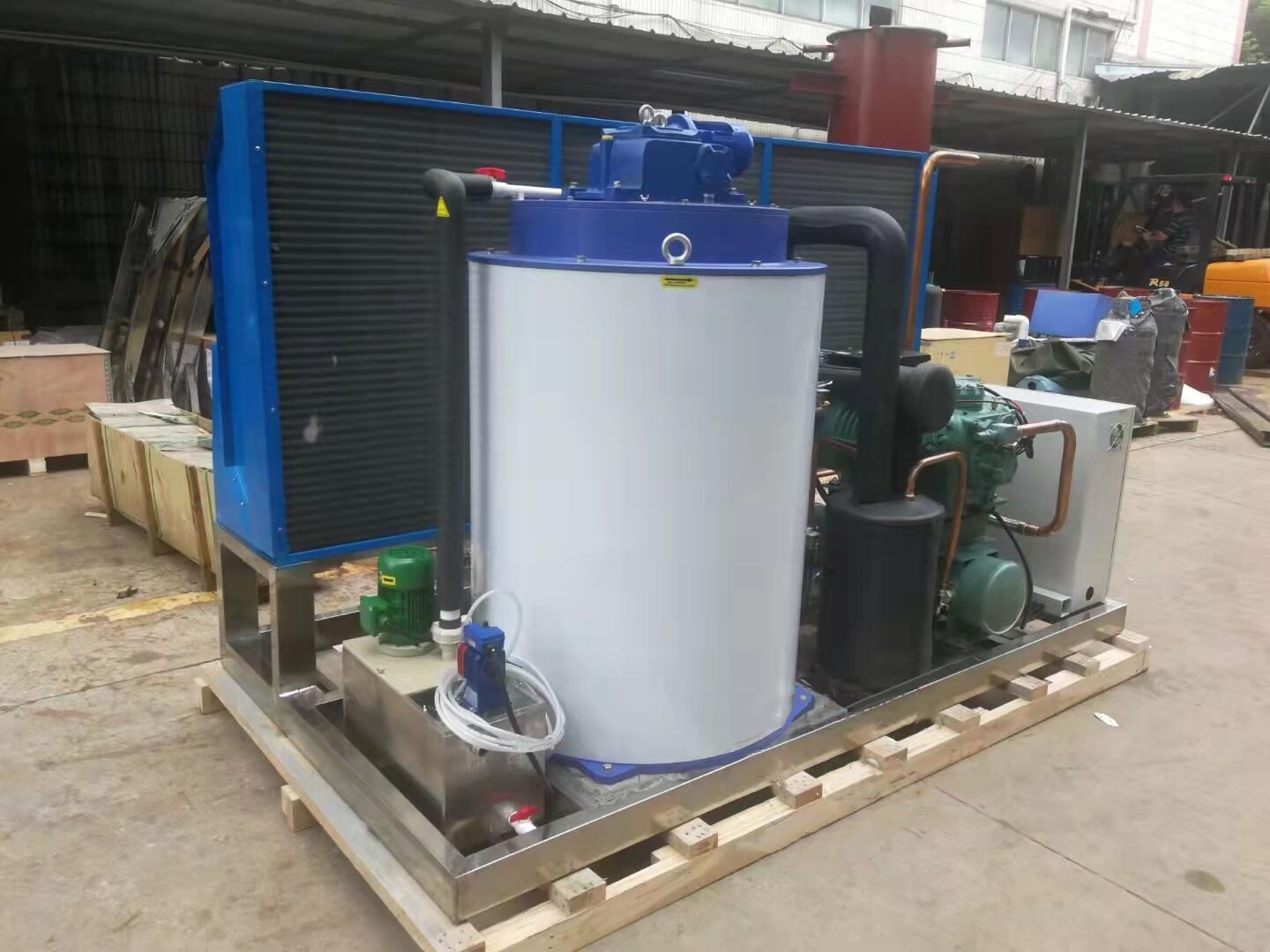
In the commercial fishing and seafood processing industry, the quality of the catch at the point of sale is directly tied to how well it was preserved from the moment it left the water. Temperature control is not a secondary concern — it is the foundation of product value, food safety compliance, and customer trust. Among the various cooling technologies available today, the flake ice machine for fish has emerged as the preferred investment for fisheries of all scales, from coastal processing plants to large-scale aquaculture operations. Understanding why this technology commands such consistent investment requires a closer look at what makes fish preservation uniquely demanding and how flake ice addresses those demands with precision.
The decision to invest in a flake ice machine for fish is rarely impulsive. It reflects a calculated understanding of spoilage biology, operational efficiency, and long-term profitability. Fisheries that have made this transition consistently report improvements in shelf life, reduced product loss, and stronger positioning in quality-sensitive markets. This article explores the core reasons behind that investment decision, examining the biological, operational, and commercial drivers that make a flake ice machine for fish a cornerstone of modern seafood preservation infrastructure.

The Biological Case for Flake Ice in Fish Preservation
How Fish Spoilage Works and Why Temperature Is Critical
Fish is one of the most perishable food products in existence. Unlike red meat or poultry, fish tissue contains high levels of free water, unsaturated fatty acids, and naturally occurring enzymes that accelerate decomposition at temperatures above 0°C. Bacterial activity, enzymatic breakdown, and oxidative rancidity all intensify rapidly once the cold chain is interrupted. The window between a fresh catch and an unsellable product can be as short as 24 to 48 hours under poor cooling conditions.
Maintaining fish at temperatures between -1°C and 2°C — the optimal chilling range — dramatically slows all three spoilage mechanisms. This is not simply about keeping fish cold; it is about maintaining a precise thermal environment that inhibits microbial growth without freezing the flesh, which would damage texture and reduce market value. A flake ice machine for fish is specifically engineered to produce ice that achieves and sustains this narrow temperature window consistently and efficiently.
The thin, flat geometry of flake ice gives it a surface area advantage over block ice or cube ice. When packed around fish, flake ice conforms to irregular body shapes, creating full-contact coverage that eliminates warm air pockets. This uniform contact is what makes a flake ice machine for fish biologically superior to alternative cooling methods in fresh fish handling.
Why Flake Ice Outperforms Other Ice Types for Seafood
Block ice requires crushing before use, which introduces inconsistency in particle size and increases the risk of physical damage to delicate fish skin and flesh. Cube ice, while convenient in food service, has a lower surface-area-to-mass ratio and does not pack tightly enough to maintain uniform contact with fish bodies. Tube ice and nugget ice share similar limitations. The flake ice machine for fish was developed specifically to overcome these shortcomings.
Flake ice is produced in thin sheets, typically 2 to 3 millimeters thick, with a semi-dry texture that prevents clumping. This allows it to flow freely around fish, fill containers evenly, and maintain consistent cooling without the mechanical pressure that crushed block ice can exert. For high-value species where skin integrity and visual presentation affect price, this gentleness is commercially significant.
Additionally, flake ice melts more slowly than crushed ice due to its lower initial temperature and higher latent heat efficiency in packed configurations. This means a flake ice machine for fish delivers longer-lasting cooling per kilogram of ice produced, reducing the frequency of ice replenishment during transport and storage.
Operational Advantages That Drive Fishery Investment
Continuous Production and On-Demand Availability
One of the most practical reasons fisheries invest in a flake ice machine for fish is the ability to produce ice continuously and on demand. Unlike purchasing ice from external suppliers, an in-house flake ice machine for fish eliminates dependency on delivery schedules, reduces procurement costs, and ensures that ice is always available at the exact moment it is needed — whether that is at the dock during unloading, in the processing hall during filleting, or in the cold storage room during packaging.
Industrial flake ice machines are designed for continuous operation, capable of producing anywhere from a few hundred kilograms to tens of tons of ice per day depending on the model. This scalability means that a fishery can match ice production precisely to its daily catch volume, avoiding both shortages that compromise preservation and overproduction that wastes energy and water.
The operational reliability of a well-maintained flake ice machine for fish also reduces the risk of cold chain failures during peak seasons, when catch volumes are highest and the consequences of inadequate cooling are most severe. For fisheries operating in remote coastal locations where external ice supply is unreliable, this self-sufficiency is not a luxury — it is a business necessity.
Labor Efficiency and Processing Line Integration
Modern flake ice machines are designed to integrate directly into seafood processing workflows. Ice can be conveyed automatically from the machine to processing stations, storage bins, and transport containers, reducing the manual labor required to handle and distribute ice throughout the facility. This integration improves throughput, reduces handling time, and minimizes the risk of temperature fluctuations caused by delays in ice application.
In processing environments where speed is critical — such as tuna loining, shrimp grading, or salmon filleting — having a flake ice machine for fish positioned at key points in the production line ensures that product temperature is controlled at every stage. Workers spend less time managing ice logistics and more time on value-adding tasks, improving overall facility productivity.
The dry, free-flowing nature of flake ice also makes it easier to handle mechanically. Auger conveyors, pneumatic systems, and gravity chutes all work effectively with flake ice, enabling automated distribution that would be impractical with block or cube ice formats. This mechanical compatibility is a key reason why the flake ice machine for fish has become standard equipment in modern seafood processing plants.
Commercial and Market Quality Drivers
Meeting Export Standards and Food Safety Regulations
Fisheries that supply domestic supermarkets, food service distributors, or international export markets face increasingly stringent food safety requirements. Regulatory frameworks in major import markets require documented evidence of cold chain integrity from catch to delivery. A flake ice machine for fish supports compliance by enabling consistent, measurable temperature control that can be recorded and verified throughout the supply chain.
HACCP-based food safety systems require that critical control points — including initial chilling, processing, and storage — maintain defined temperature parameters. The use of a flake ice machine for fish at these control points provides a reliable, auditable cooling method that satisfies both internal quality standards and third-party certification requirements. Fisheries that cannot demonstrate cold chain compliance risk losing access to premium markets entirely.
Beyond regulatory compliance, the visual quality of fish preserved with flake ice is consistently superior to fish cooled with inferior methods. Bright eyes, firm flesh, intact skin, and natural coloration are all indicators of freshness that buyers assess at the point of purchase. A flake ice machine for fish helps fisheries deliver product that meets these visual quality benchmarks reliably, supporting premium pricing and repeat business.
Reducing Product Loss and Improving Profit Margins
Product loss due to spoilage is one of the most significant cost factors in the seafood industry. Even a modest reduction in spoilage rates can translate into substantial financial gains when applied across the volume of a commercial fishery. Investing in a flake ice machine for fish is fundamentally an investment in yield protection — ensuring that the maximum proportion of each catch reaches the market in sellable condition.
Studies in seafood supply chain management consistently show that proper icing at the point of catch can extend the marketable shelf life of fresh fish by three to five days compared to inadequate cooling. For fisheries operating on thin margins, this extension can mean the difference between profitable and unprofitable operations, particularly during periods of high catch volume when market prices are under pressure.
The return on investment for a flake ice machine for fish is therefore not measured solely in ice production capacity but in the cumulative value of product that would otherwise be lost. When fisheries calculate the cost of spoilage against the capital and operating cost of an in-house flake ice machine for fish, the financial case for investment becomes straightforward.
Long-Term Strategic Value for Fishery Operations
Scalability and Adaptation to Growing Operations
As fisheries grow — whether through expanded vessel fleets, increased processing capacity, or entry into new markets — their ice requirements grow proportionally. A flake ice machine for fish can be scaled to match operational growth by upgrading to higher-capacity models or adding additional units. This scalability makes the flake ice machine for fish a long-term infrastructure asset rather than a fixed-capacity solution.
Modular flake ice systems allow fisheries to start with a capacity that matches current needs and expand incrementally as the business develops. This approach avoids the capital inefficiency of over-investing in capacity that is not immediately needed while ensuring that the infrastructure is in place to support growth without operational disruption.
The durability and low maintenance requirements of industrial flake ice machines also contribute to their long-term value. With proper maintenance, a quality flake ice machine for fish can operate reliably for ten to fifteen years or more, providing a stable foundation for cold chain operations throughout the asset's useful life.
Energy Efficiency and Sustainability Considerations
Modern flake ice machines are significantly more energy-efficient than earlier generations of ice-making equipment. Advances in refrigeration compressor technology, heat exchanger design, and insulation materials have reduced the energy consumption per kilogram of ice produced, lowering the operating cost of a flake ice machine for fish over its lifetime. For fisheries operating in regions with high electricity costs, this efficiency improvement directly affects profitability.
Many contemporary flake ice machines also support the use of environmentally responsible refrigerants with lower global warming potential, aligning fishery operations with sustainability commitments that are increasingly important to buyers, certification bodies, and regulatory authorities. Investing in a modern flake ice machine for fish therefore supports both operational efficiency and corporate sustainability objectives simultaneously.
Water consumption is another consideration. Flake ice machines are designed to minimize water waste through efficient ice formation cycles and, in some configurations, water recirculation systems. For fisheries operating in water-stressed regions or under environmental permits that limit water discharge, this efficiency is an additional operational benefit of the flake ice machine for fish.
FAQ
What capacity flake ice machine for fish does a commercial fishery typically need?
Capacity requirements depend on daily catch volume, processing throughput, and storage duration. A general industry guideline is to use approximately 0.5 to 1 kilogram of flake ice per kilogram of fish for initial chilling, with additional ice required for storage and transport. A fishery processing 10 tons of fish per day would typically require a flake ice machine for fish capable of producing 5 to 10 tons of ice per day, though specific requirements should be assessed based on facility layout and workflow.
How does a flake ice machine for fish differ from a standard commercial ice maker?
A flake ice machine for fish is specifically engineered to produce thin, semi-dry ice flakes optimized for direct contact with seafood. Standard commercial ice makers produce cube or nugget formats designed for beverage cooling, which have lower surface area and do not conform to irregular fish shapes. The flake ice machine for fish operates at lower evaporator temperatures and uses a different ice formation mechanism — typically a rotating drum or cylinder — to produce the flat, thin flakes that are ideal for seafood preservation.
Can a flake ice machine for fish be used in outdoor or marine environments?
Yes, industrial flake ice machines are available in configurations designed for marine and outdoor installation, including corrosion-resistant materials, sealed electrical components, and robust structural designs that withstand vibration and humidity. Vessel-mounted flake ice machines for fish are commonly used on larger fishing boats to chill the catch immediately after harvest, which is the most effective point in the cold chain to apply cooling. Shore-based outdoor installations are also standard in many port and dock facilities.
How long does flake ice last when used for fish storage?
The longevity of flake ice in fish storage depends on ambient temperature, insulation quality, and the ratio of ice to fish. In a well-insulated container at ambient temperatures below 20°C, flake ice produced by a flake ice machine for fish can maintain effective chilling for 24 to 48 hours before requiring replenishment. In refrigerated storage rooms, the same ice can last significantly longer. Proper container insulation and minimizing lid opening frequency are the most effective ways to extend ice life and reduce the frequency of replenishment cycles.