
 EN


In seafood processing facilities, temperature control is not a preference — it is a biological necessity. From the moment a fish is harvested to the point it reaches a consumer's plate, maintaining a consistently low temperature determines whether the product is safe, fresh, and commercially viable. The flake ice machine for fish has become one of the most operationally critical pieces of equipment in this chain, precisely because it produces a form of ice that is uniquely suited to the physical and biochemical demands of seafood handling. Understanding how this equipment is actually deployed inside a processing facility reveals why it has displaced other ice formats in so many professional operations.
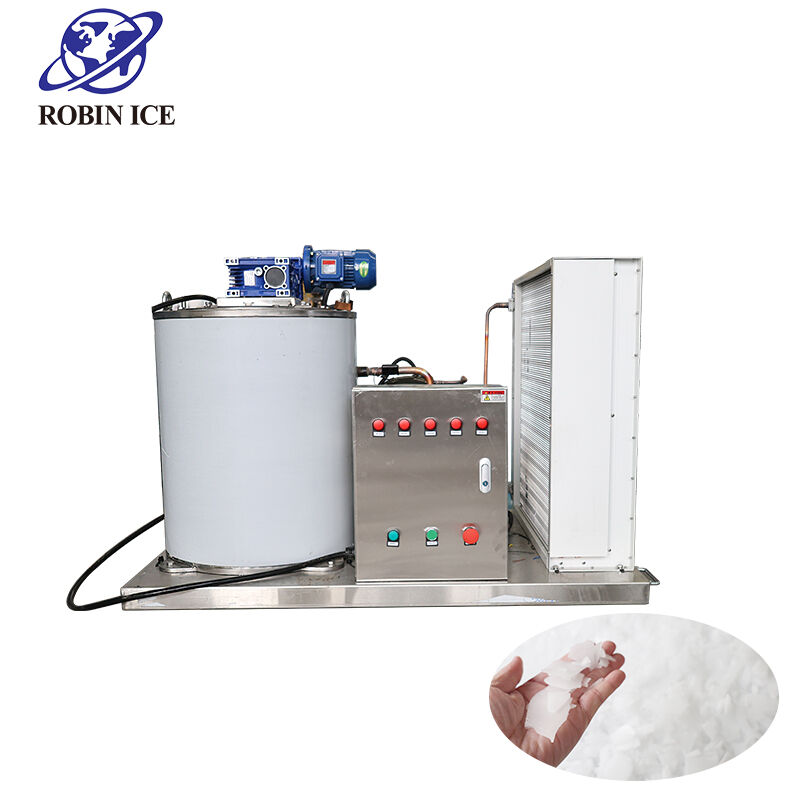
Flake ice is characterized by its thin, flat, irregular shape and its semi-dry texture, which together give it a surface-area-to-mass ratio far superior to block or cube ice. When a flake ice machine for fish operates inside a processing plant, it continuously produces this ice in large volumes, feeding it directly into the workflow at multiple stages. The result is a cold, moldable medium that wraps around fish bodies and fillets without bruising, absorbs heat rapidly, and maintains a stable temperature environment throughout sorting, cleaning, filleting, packing, and storage. This article examines each of those stages in detail to explain exactly how the equipment functions within a real seafood processing context.
The Role of Flake Ice in Seafood Temperature Management
Why Temperature Precision Matters in Fish Processing
Fish tissue begins to deteriorate almost immediately after harvest due to enzymatic activity, bacterial growth, and oxidation. The rate of these processes is directly tied to temperature — every degree above the optimal range accelerates spoilage. Seafood processing facilities operate under strict food safety regulations that require product temperatures to be maintained within narrow bands, often between 0°C and 2°C, throughout the entire handling process.
A flake ice machine for fish supports this requirement by producing ice at a temperature of approximately -5°C to -8°C at the point of generation. When this ice contacts fish tissue, it draws heat away rapidly and then stabilizes at 0°C as it melts, creating a sustained cooling effect rather than a brief cold shock. This thermal behavior is precisely what seafood processors need — not just initial cooling, but continuous temperature maintenance over hours of processing time.
The thin flake format also means the ice conforms to irregular fish shapes, eliminating air gaps that would otherwise act as insulating pockets. This conformability is a functional advantage that block ice simply cannot replicate, and it is one of the primary reasons the flake ice machine for fish has become standard equipment in professional facilities.
Continuous Ice Supply as an Operational Requirement
Processing facilities do not work in batches when it comes to ice demand — they require a continuous, reliable supply throughout every shift. A flake ice machine for fish is designed for exactly this kind of sustained output. Industrial models can produce anywhere from several hundred kilograms to tens of tons of flake ice per day, depending on the scale of the facility and the volume of product being processed.
This continuous production capability means that ice is available at every workstation, in every storage bin, and at every packing line simultaneously. There is no waiting for ice deliveries, no risk of running short during peak processing hours, and no dependency on external supply chains that could be disrupted by logistics or weather. The flake ice machine for fish essentially becomes a utility within the facility, as fundamental as water or electricity.
Many facilities integrate the ice machine with automated conveyor or pneumatic distribution systems, so that freshly produced flake ice is transported directly to the points of use without manual handling. This integration reduces labor costs, minimizes contamination risk, and ensures that ice quality is preserved from production to application.
How Flake Ice Is Applied at Each Processing Stage
Reception and Initial Sorting
When raw fish arrives at a processing facility — whether from fishing vessels, aquaculture farms, or wholesale suppliers — the first priority is to bring the product temperature down to the safe handling range as quickly as possible. At the reception dock, workers layer incoming fish with flake ice produced by the facility's flake ice machine for fish, creating alternating layers of product and ice in bins or on conveyor surfaces.
This layering technique works because flake ice has a high surface contact area. Each fish is surrounded on multiple sides by ice, maximizing the rate of heat transfer. The semi-dry texture of flake ice also means it does not immediately pool into water, which would reduce its cooling efficiency and create hygiene issues on the processing floor.
During the sorting phase, where fish are graded by size, species, or quality, the ice continues to perform its function passively. Workers can sort through iced product without the fish warming significantly, because the surrounding flake ice maintains the ambient temperature of the working mass. This is a practical advantage that directly affects product quality at every downstream stage.
Filleting, Cleaning, and Portioning Lines
On the filleting and portioning lines, fish are processed at high speed, and the exposed flesh is particularly vulnerable to temperature rise and bacterial contamination. Facilities using a flake ice machine for fish typically position ice dispensers or chilled water systems fed by flake ice directly alongside these lines, so that cut portions can be immediately placed into iced trays or containers.
Some facilities use a slurry approach, mixing flake ice with chilled water to create an ice slurry that can be pumped or poured over fillets. The flake ice machine for fish is well suited to this application because flake ice dissolves more uniformly in water than block or cube ice, producing a consistent slurry temperature without large unmixed cold zones.
The physical gentleness of flake ice is also relevant here. Fillets and delicate portions can be damaged by the sharp edges of crushed ice or the weight of block ice. Flake ice, with its soft, flat profile, cushions the product rather than pressing into it, preserving the visual quality and texture that buyers and retailers expect from premium seafood.
Packing and Cold Storage Preparation
Before seafood is packed for distribution, it must be presented in a way that maintains temperature during transit. Retail packs, wholesale boxes, and export containers all rely on ice as the primary cooling medium for non-frozen product. The flake ice machine for fish supplies the ice that goes directly into these packs, either as a bed beneath the product, a layer on top, or both.
Packing with flake ice is faster and more consistent than packing with other ice formats. Workers can scoop or pour flake ice quickly, and it settles evenly around the product without requiring manual adjustment. This speed matters on high-volume packing lines where throughput is measured in hundreds of units per hour.
For cold storage areas within the facility, flake ice is also used to maintain temperature in holding bins where product awaits the next processing step. The flake ice machine for fish ensures that these bins are continuously replenished, preventing any temperature drift that could compromise product safety or quality during holding periods.
Equipment Design Features That Support Seafood Processing Workflows
Hygienic Construction and Food-Grade Materials
A flake ice machine for fish used in a food processing environment must meet strict hygiene standards. Industrial models designed for seafood applications are constructed with food-grade stainless steel on all surfaces that contact ice or water. The evaporator drum, ice scraper, and discharge chute are all designed to be easily cleaned and sanitized, preventing biofilm buildup and cross-contamination.
Many machines also incorporate self-draining designs and smooth internal surfaces that do not trap organic material. This is important in a seafood processing environment where fish residue, scales, and processing water are constantly present. The ability to clean the machine thoroughly and quickly during shift changes or daily sanitation routines is a practical requirement, not just a regulatory one.
Facilities that operate under HACCP, BRC, or other food safety certification frameworks will typically require documentation of the machine's material specifications and cleaning protocols. Reputable flake ice machine for fish manufacturers provide this documentation as part of the equipment package, supporting the facility's compliance obligations.
Capacity Sizing and Integration with Facility Layout
Selecting the right capacity for a flake ice machine for fish requires an analysis of the facility's daily throughput, the number of processing stages that require ice, and the ambient temperature of the operating environment. A machine that is undersized will create bottlenecks; one that is oversized will consume unnecessary energy and may produce ice faster than it can be used, leading to waste.
Industrial flake ice machines are available in a wide range of output capacities, and many facilities use multiple units positioned at different points in the processing floor rather than a single centralized machine. This distributed approach reduces ice transport distances, minimizes temperature gain during distribution, and provides redundancy in case one unit requires maintenance.
The physical footprint of the machine, its water and power connections, and its compatibility with existing ice storage and distribution infrastructure are all factors that influence placement decisions. Facilities planning a new installation or an upgrade should work with equipment suppliers to model ice demand across all processing stages before specifying machine capacity. A well-sized flake ice machine for fish pays for itself through reduced product loss, lower labor costs, and improved product quality consistency.
Operational Efficiency and Quality Outcomes
Reducing Product Loss Through Consistent Cooling
One of the most measurable benefits of deploying a flake ice machine for fish in a processing facility is the reduction in product loss due to spoilage. When temperature control is inconsistent — because ice runs out, because the wrong ice format is used, or because distribution is slow — fish quality degrades faster than it should, and product that could have been sold at full value is downgraded or discarded.
Facilities that operate with a reliable, high-capacity flake ice machine for fish report more consistent product quality at the point of dispatch, fewer customer complaints about freshness, and lower rates of product rejection during quality inspections. These outcomes translate directly into financial performance, making the equipment investment straightforward to justify in operational terms.
The consistency of flake ice production also matters. Unlike purchased ice, which may vary in quality, temperature, or contamination risk depending on the supplier, ice produced on-site by a dedicated flake ice machine for fish is always at the correct temperature, always food-grade, and always available on demand. This reliability removes a significant variable from the quality control equation.
Energy Efficiency and Long-Term Operating Costs
Modern industrial flake ice machine for fish designs incorporate energy-efficient compressor systems, optimized evaporator geometries, and intelligent control systems that adjust output based on demand. These features reduce electricity consumption per kilogram of ice produced, which matters significantly when a facility is running machines continuously across multiple shifts.
Water consumption is another operating cost factor. Flake ice machines are designed to minimize water waste during the ice-making cycle, and many models include water recycling features that recover meltwater for reuse in non-food-contact applications. Over the course of a year, these efficiencies add up to meaningful cost savings for high-volume operations.
Maintenance requirements for a well-designed flake ice machine for fish are relatively low when the machine is properly installed and operated within its specified parameters. Routine tasks include cleaning the evaporator, checking refrigerant levels, and inspecting the ice scraper mechanism. Facilities that follow manufacturer-recommended maintenance schedules typically experience long machine lifespans and minimal unplanned downtime.
FAQ
What makes flake ice better than block or cube ice for fish processing?
Flake ice has a much higher surface contact area than block or cube ice, which means it transfers heat away from fish tissue more efficiently. Its soft, flat shape also conforms to irregular fish bodies without causing physical damage to the product. These properties make the flake ice machine for fish the preferred choice in professional seafood processing environments where both cooling speed and product integrity matter.
How much ice does a seafood processing facility typically need per day?
Ice demand varies significantly depending on the volume of product processed, the number of processing stages, and the ambient temperature of the facility. As a general guideline, seafood processors often use between 0.5 and 1 kilogram of ice per kilogram of fish processed, though this ratio can be higher in warm climates or for particularly temperature-sensitive species. A properly sized flake ice machine for fish should be specified based on a detailed demand analysis rather than a generic estimate.
Can a flake ice machine for fish be used in both fresh and saltwater seafood processing?
Yes. The flake ice machine for fish produces ice from fresh water by default, which is suitable for both freshwater and saltwater species. In some marine applications, particularly on fishing vessels or in facilities processing highly saline product, seawater ice machines are available that use filtered seawater as the input. The choice between freshwater and seawater ice depends on the specific application, regulatory requirements, and the species being processed.
How often does a flake ice machine for fish need to be cleaned in a seafood processing environment?
In a seafood processing facility, the flake ice machine for fish should be cleaned and sanitized according to the facility's HACCP plan, which typically requires daily or shift-based cleaning of ice contact surfaces and a more thorough deep clean on a weekly or monthly basis. The frequency depends on the volume of production, the ambient conditions, and the specific food safety standards the facility operates under. Manufacturers provide detailed cleaning protocols that should be integrated into the facility's standard operating procedures.
Table of Contents
- The Role of Flake Ice in Seafood Temperature Management
- How Flake Ice Is Applied at Each Processing Stage
- Equipment Design Features That Support Seafood Processing Workflows
- Operational Efficiency and Quality Outcomes
-
FAQ
- What makes flake ice better than block or cube ice for fish processing?
- How much ice does a seafood processing facility typically need per day?
- Can a flake ice machine for fish be used in both fresh and saltwater seafood processing?
- How often does a flake ice machine for fish need to be cleaned in a seafood processing environment?