
 EN


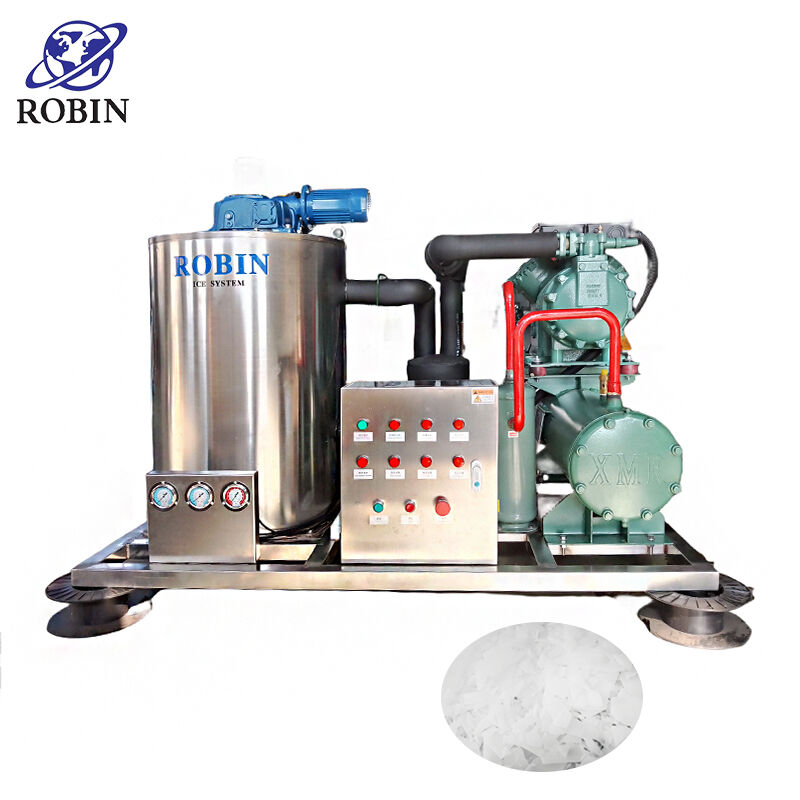
When seafood leaves the water, the clock starts ticking. Temperature control during marine transport is one of the most critical factors determining whether fish arrives at its destination in premium condition or as a degraded, unsellable product. The question many operators in the fishing and seafood logistics industry are asking is whether a flake ice machine for fish can genuinely improve freshness during the demanding conditions of marine transport. The short answer is yes — and the reasons go well beyond simply keeping things cold.
Marine transport introduces a unique set of challenges that land-based cold chain logistics simply does not face. Vessels operate in humid, salt-laden environments, catches are loaded in bulk under time pressure, and the journey from fishing ground to processing facility or market can span many hours or even days. In this context, the flake ice machine for fish has emerged as a purpose-built solution that addresses not just temperature, but the physical and biological mechanisms of fish spoilage at sea. Understanding how and why it works requires a closer look at the science of freshness preservation and the engineering behind modern flake ice systems.
The Science Behind Fish Spoilage During Transport
Biological Mechanisms That Degrade Freshness
Fish spoilage is driven by a combination of microbial activity, enzymatic reactions, and oxidation. Once a fish is removed from its natural environment, bacteria present on the skin, gills, and gut begin to multiply rapidly, producing compounds that cause off-flavors, discoloration, and tissue breakdown. Enzymatic autolysis — the process by which the fish's own enzymes begin digesting its tissues — accelerates at temperatures above 0°C. For operators relying on a flake ice machine for fish, the goal is to suppress all three of these processes simultaneously by maintaining temperatures as close to 0°C as possible without freezing the product.
Oxidation of lipids, particularly in fatty species like mackerel, tuna, and salmon, is another major spoilage pathway. Rancidity develops quickly when fish is exposed to air and warmth, producing the characteristic 'fishy' smell that signals quality loss. Effective icing with a flake ice machine for fish creates a cold, moist barrier around each fish or fillet, limiting oxygen exposure and slowing lipid oxidation significantly. This is a biochemical advantage that block ice or crushed ice cannot replicate with the same consistency.
Why Temperature Uniformity Matters More Than Average Cold
A common misconception in seafood handling is that achieving a low average temperature is sufficient. In reality, temperature uniformity across the entire catch is what determines shelf life outcomes. Pockets of warmth — even a few degrees above optimal — create microbial hotspots that can compromise an entire batch. The flake ice machine for fish produces thin, flat ice pieces with a high surface-area-to-mass ratio, which means they conform closely to the irregular shapes of fish bodies and fill gaps between individual pieces in a storage container or fish hold.
This conforming characteristic is what sets flake ice apart from other ice formats in marine applications. Block ice requires manual breaking and leaves air gaps. Tube ice and cube ice roll away from curved surfaces. Flake ice produced by a dedicated flake ice machine for fish wraps around the product, creating consistent thermal contact across every surface. The result is a more uniform temperature profile throughout the entire load, which directly translates to extended freshness and reduced spoilage rates.
How a Flake Ice Machine for Fish Functions in Marine Conditions
Core Operating Principles of Flake Ice Generation
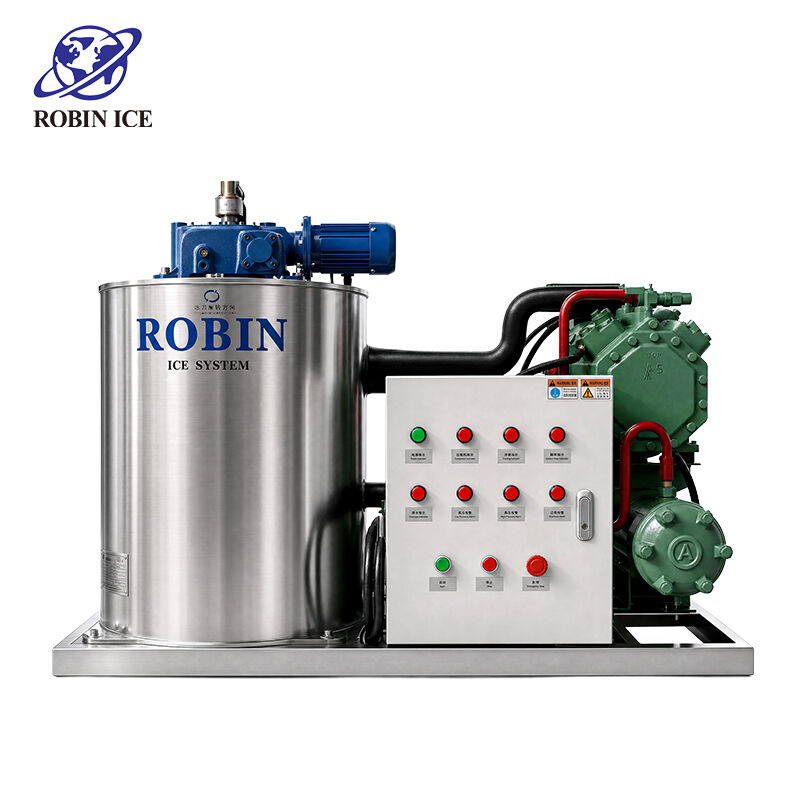
A flake ice machine for fish operates by circulating water — either fresh water or seawater, depending on the model — over a refrigerated drum or plate. As the water contacts the cold surface, it freezes into a thin layer that is then scraped off by a mechanical harvester, producing the characteristic flat, irregular flakes. These flakes are typically 2–3 mm thick and have a dry, non-clumping texture that makes them easy to distribute evenly over and around fish in storage holds or transport containers.
Seawater flake ice machines are specifically engineered for marine environments, using the vessel's surrounding seawater as both the freezing medium and the cooling source. This design eliminates the need to carry large volumes of fresh water onboard, reduces operational costs, and produces ice with a slight salinity that is isotonic with fish tissue — meaning it does not draw moisture out of the fish through osmosis. For operators evaluating a flake ice machine for fish in a marine transport context, the seawater variant offers a compelling combination of efficiency and product quality preservation.
Onboard Integration and Operational Workflow
Modern flake ice machines for fish are designed to integrate directly into the workflow of fishing vessels and transport ships. Compact units can be installed in the fish hold area, producing ice continuously as the vessel operates. This on-demand production model means that ice is always fresh, cold, and available at the point of need — eliminating the logistical challenge of loading pre-made ice before departure and managing its gradual melt over the course of a voyage.
The operational workflow typically involves layering flake ice at the bottom of storage bins or fish holds, placing fish in organized layers, and covering each layer with additional ice from the flake ice machine for fish. This 'ice sandwich' approach ensures that every fish is in direct contact with ice on multiple surfaces. As the ice melts, the cold meltwater continues to cool the fish and flush away bacteria and metabolic waste products, maintaining a clean, cold environment throughout the transport duration.
Maintenance requirements for onboard flake ice machines are designed to be manageable in marine conditions. Seawater models include filtration systems to handle particulates and salt scaling, and most units are built with corrosion-resistant materials suited to the harsh marine environment. For fleet operators, the reliability of a flake ice machine for fish over extended voyages is a critical procurement consideration, and leading designs address this through robust compressor systems and simplified service access.
Freshness Outcomes: What the Data and Practice Show
Shelf Life Extension Compared to Alternative Icing Methods
Practical experience across commercial fishing fleets consistently demonstrates that fish iced with flake ice from a dedicated flake ice machine for fish maintains acceptable quality for significantly longer than fish iced with block ice or no ice at all. While exact figures vary by species, water temperature, and handling practices, the consensus in the seafood industry points to flake ice extending the marketable shelf life of whole fish by two to four days compared to block ice under equivalent transport conditions.
This extension is not trivial. In marine transport, where vessels may be at sea for 24 to 72 hours before reaching port, an additional two days of shelf life can mean the difference between delivering a premium fresh product and delivering a commodity that must be immediately processed or discounted. For high-value species — tuna, sea bass, grouper, and similar market fish — the economic impact of using a flake ice machine for fish is directly measurable in the price achieved at auction or wholesale.
Quality Indicators: Appearance, Texture, and Odor
Freshness in fish is assessed through a combination of visual, tactile, and olfactory indicators. Eyes should be clear and convex, gills should be bright red, flesh should be firm and elastic, and odor should be clean and oceanic rather than ammoniacal or sulfurous. Fish transported with consistent flake ice coverage from a flake ice machine for fish consistently scores higher on these quality indices than fish transported with inferior icing methods.
The moisture-retaining properties of flake ice are particularly important for appearance. Fish that dries out during transport develops a dull, sunken appearance that signals age to buyers even when the product is technically within safe consumption parameters. The continuous cold moisture environment created by a flake ice machine for fish keeps skin surfaces hydrated and bright, preserving the visual appeal that commands premium pricing in fresh fish markets.
Practical Considerations for Marine Transport Operators
Selecting the Right Capacity and Configuration
Choosing the appropriate flake ice machine for fish depends on several operational variables: the size of the vessel, the typical catch volume per voyage, the duration of transport, and whether the vessel operates in tropical, temperate, or cold-water environments. As a general guideline, operators should plan for an ice-to-fish ratio of at least 1:1 by weight for short voyages and up to 2:1 for longer hauls or warm-water operations. The machine's daily production capacity should comfortably meet this requirement with margin for peak catch days.
Seawater flake ice machines are the preferred choice for most marine transport applications due to their self-sufficient water supply and the quality advantages of isotonic ice. Fresh water models may be appropriate for vessels that also serve onboard food preparation needs or operate in environments where seawater quality is a concern. In either case, the flake ice machine for fish should be matched to the vessel's power supply capacity, as refrigeration compressors represent a significant electrical load that must be factored into the vessel's overall energy management plan.
Handling Practices That Maximize the Benefits of Flake Ice
Even the best flake ice machine for fish cannot compensate for poor handling practices. Fish should be iced as quickly as possible after capture — ideally within minutes of coming aboard. Pre-chilling the fish hold before loading begins helps establish a cold environment that reduces the thermal load on the ice. Fish should be handled gently to avoid bruising, which accelerates spoilage at the injury site regardless of icing quality.
Proper drainage is also essential. As ice melts, the resulting water must be able to drain away from the fish rather than pooling and creating a warm, bacteria-rich bath. Fish holds designed for use with a flake ice machine for fish typically include sloped floors and drainage channels that facilitate this. Operators should inspect and clear drainage points regularly during transport to ensure the system functions as intended throughout the voyage.
Training crew members in correct icing technique is an investment that pays dividends in product quality. The flake ice machine for fish provides the raw material, but the way that ice is applied — the depth of the base layer, the coverage between fish, the frequency of replenishment — determines the actual temperature profile achieved in the hold. Standardized icing protocols, developed in consultation with quality assurance specialists, help ensure consistent results across different crew members and voyage conditions.
Economic and Competitive Implications for the Seafood Supply Chain
Cost-Benefit Analysis for Fleet Operators
The capital cost of installing a flake ice machine for fish onboard a commercial vessel is offset by multiple economic benefits. Reduced spoilage rates directly lower the volume of catch that must be sold at discount or written off entirely. Extended shelf life opens access to more distant markets and longer distribution windows, increasing the operator's pricing flexibility. Premium quality fish commands higher prices at auction, and consistent quality builds the reputation that supports long-term buyer relationships.
Operational costs for a seawater flake ice machine are relatively low, as the primary inputs are electrical power and seawater — both of which are available onboard at minimal marginal cost. Maintenance costs are predictable and manageable when the machine is serviced according to manufacturer schedules. When these factors are weighed against the value of the catch being protected, the return on investment for a flake ice machine for fish is typically realized within one to two fishing seasons for most commercial operations.
Meeting Market and Regulatory Quality Standards
Export markets for fresh seafood, particularly in Europe, North America, and premium Asian markets, impose strict temperature and quality standards that must be documented throughout the supply chain. Using a flake ice machine for fish that maintains verifiable temperature control from vessel to port supports compliance with these standards and facilitates the documentation required for export certification. Buyers and importers increasingly require evidence of cold chain integrity, and onboard ice production is a key component of that evidence.
Regulatory frameworks in many jurisdictions also specify minimum icing requirements for commercially caught fish intended for human consumption. A properly sized and operated flake ice machine for fish helps operators meet these requirements consistently, reducing the risk of regulatory non-compliance and the associated penalties or market access restrictions. As food safety standards continue to tighten globally, investment in reliable onboard ice production is increasingly a baseline requirement rather than a competitive differentiator.
FAQ
Can a flake ice machine for fish be used on small fishing vessels?
Yes. Flake ice machines for fish are available in a wide range of capacities, from compact units producing 100–200 kg of ice per day suitable for small inshore vessels, up to large industrial systems for offshore trawlers and transport ships. The key is matching the machine's output to the vessel's catch volume and voyage duration. Even small-scale operators benefit significantly from onboard flake ice production in terms of product quality and reduced spoilage losses.
Is seawater flake ice safe for direct contact with fish intended for human consumption?
Seawater used in a flake ice machine for fish is typically drawn from open ocean or clean coastal waters and passes through filtration systems before freezing. The resulting ice is considered safe for direct contact with fish in most regulatory frameworks, provided the source water meets applicable quality standards. Operators should verify local and export market regulations regarding seawater ice use, as requirements vary by jurisdiction and destination market.
How does flake ice compare to refrigerated seawater systems for fish freshness?
Refrigerated seawater (RSW) systems immerse fish in chilled seawater and are effective for bulk catches of smaller species. Flake ice from a flake ice machine for fish is generally preferred for larger, higher-value fish where physical appearance and individual fish quality are important, as RSW can cause some surface discoloration and texture changes with extended immersion. Many vessels use both systems in combination, applying RSW for initial rapid chilling and flake ice for storage and transport.
What maintenance does a flake ice machine for fish require during a voyage?
Routine maintenance during a voyage typically includes monitoring water inlet filters for blockage, checking ice production output and quality, and ensuring drainage systems in the fish hold are clear. Seawater models require periodic descaling of the evaporator surface to prevent salt buildup that reduces efficiency. Most modern flake ice machines for fish include diagnostic displays that alert operators to performance issues, allowing problems to be addressed before they affect ice production and, consequently, catch quality.
Table of Contents
- The Science Behind Fish Spoilage During Transport
- How a Flake Ice Machine for Fish Functions in Marine Conditions
- Freshness Outcomes: What the Data and Practice Show
- Practical Considerations for Marine Transport Operators
- Economic and Competitive Implications for the Seafood Supply Chain
-
FAQ
- Can a flake ice machine for fish be used on small fishing vessels?
- Is seawater flake ice safe for direct contact with fish intended for human consumption?
- How does flake ice compare to refrigerated seawater systems for fish freshness?
- What maintenance does a flake ice machine for fish require during a voyage?