
 EN


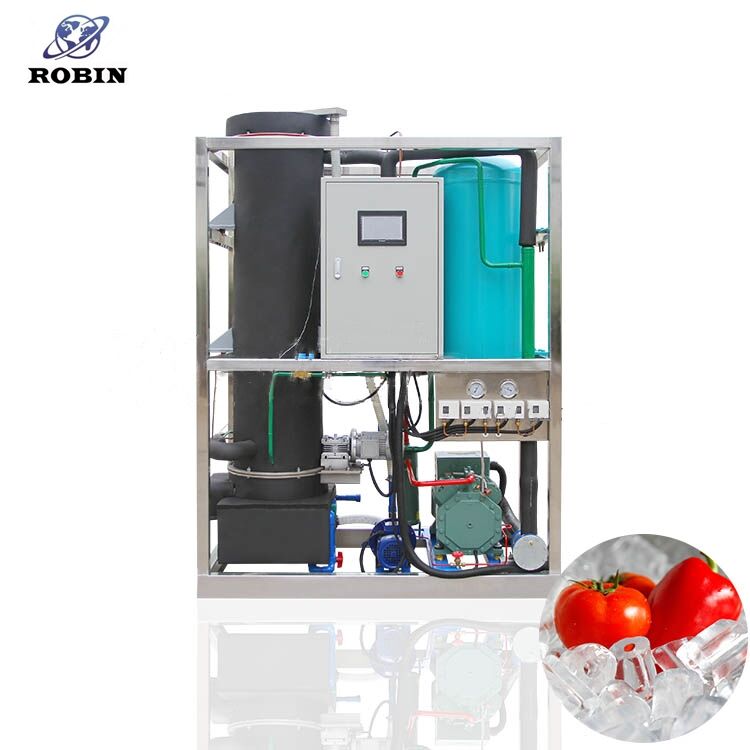
In the fast-moving world of food service and beverage production, maintaining precise temperature control is not optional — it is a core operational requirement. The tube ice maker machine has become a central component in many commercial and industrial cooling systems because of its ability to produce uniform, dense, slow-melting ice cylinders that outperform flake or cube ice in a wide range of applications. Understanding exactly how this equipment is integrated into beverage and food cooling workflows helps purchasing managers, operations directors, and facility planners make informed decisions about ice production capacity, system design, and overall cooling efficiency.
A tube ice maker machine works by freezing water inside vertical cylindrical tubes within the evaporator. When the ice reaches the desired wall thickness, a hot gas defrost cycle releases the hollow tubes, which are then cut into specific lengths — typically between 30mm and 50mm — creating the signature cylindrical shape that gives tube ice its name. This process is highly repeatable and energy-efficient, which is why the tube ice maker machine is deployed across beverage bottling plants, food processing facilities, seafood cooling operations, hotel catering systems, and commercial beverage bars worldwide. The sections below explain in detail how these machines are used across these environments and why the tube ice format is particularly well-suited to each application.
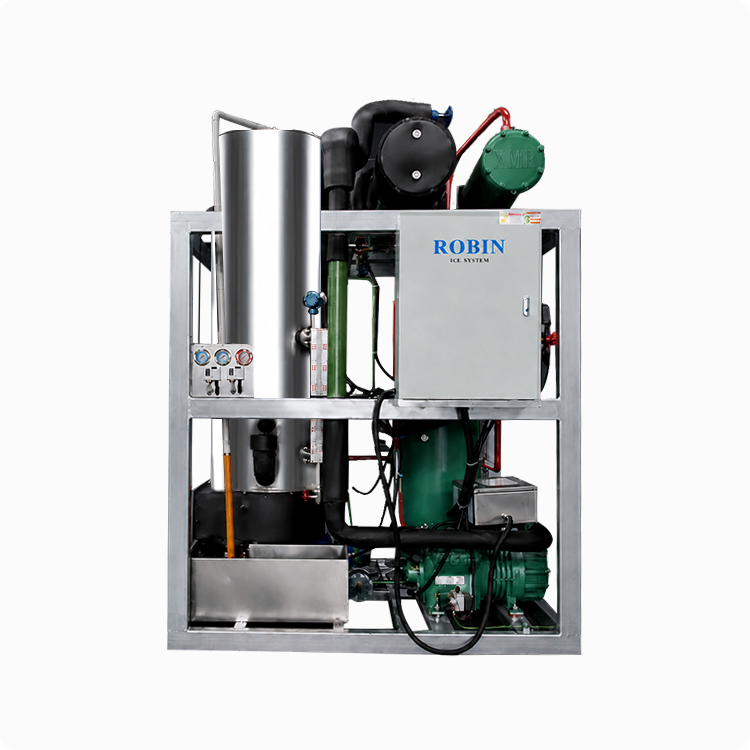
The Role of Tube Ice Maker Machine in Beverage Cooling Systems
Keeping Bulk Beverages at Safe Temperatures
Beverage cooling operations require a steady, reliable supply of ice that does not dilute the product too quickly or introduce particulate contamination. A tube ice maker machine addresses both concerns effectively. Because tube ice is hollow and dense, it melts at a significantly slower rate than flake or nugget ice, which means less meltwater in open display bins, beverage coolers, and transport containers. This slower melt rate is critical in retail beverage environments where beverages are displayed on ice for extended periods.
In bottling facilities, the tube ice maker machine is often connected directly to conveyors or ice storage silos, allowing automated distribution of ice into cooling tunnels where bottled or canned products pass through. The cylindrical ice pieces pack efficiently around containers, providing even surface contact and consistent temperature reduction across the entire batch. This mechanical compatibility with automated systems is one reason the tube ice maker machine is favored over less uniform ice forms in industrial-scale operations.
Commercial bar and restaurant settings also rely on the tube ice maker machine to supply ice for blended drinks, punch bowls, and display presentations. The transparent, crystal-clear appearance of tube ice is visually appealing, enhancing the presentation quality of beverages served to customers. Beyond aesthetics, the structural integrity of tube ice means it holds its shape under the weight of stacked beverages or heavy garnishes, keeping displays organized and attractive for longer service periods.
Ice-Based Cooling in Drink Dispensing Infrastructure
In large-venue hospitality settings — such as hotels, conference centers, and sports stadiums — drink dispensing stations rely on a tube ice maker machine to supply ice to multiple points of use simultaneously. The machine connects to an ice storage bin or automated dispensing unit, from which portioned quantities are delivered to service counters on demand. This centralized production model reduces labor requirements and ensures that every service point receives ice of consistent quality and size.
The hollow core of tube ice also plays a functional role in certain fountain drink systems. Carbonated beverage dispensers benefit from the slow dilution behavior of tube ice, which prevents rapid flavor weakening that can occur when fast-melting ice formats are used. Operations managers who switch to a tube ice maker machine for their fountain beverage stations frequently report improved drink quality scores and reduced customer complaints about watered-down beverages.
In outdoor event catering, mobile cooling carts and portable ice chests stocked with tube ice from a tube ice maker machine maintain safe beverage temperatures for hours longer than ice made from less dense formats. This is especially important in warm climates where ambient temperatures accelerate ice melt. Event planners and catering contractors factor the melt rate and production capacity of the tube ice maker machine directly into their logistics calculations when planning large outdoor events.
Food Processing and Preservation Applications
Seafood Cooling and Freshness Maintenance
The seafood industry is one of the largest and most demanding users of tube ice maker machine technology. Freshly caught fish, shellfish, and crustaceans must be cooled rapidly to near-freezing temperatures immediately after harvest to prevent bacterial growth and maintain the firmness of the flesh. Tube ice is ideal for this purpose because its cylindrical shape allows it to fill the spaces between fish bodies and boxes efficiently, maximizing surface contact and heat absorption without the bruising risk that can come from angular crushed ice.
Processing plants typically install a tube ice maker machine at or near the point of initial handling, so ice is available immediately as catches arrive. Ice is layered alternately with fish layers in transport containers, and the slow melt rate of tube ice keeps the product cold throughout the journey to market or processing. Distributors who operate refrigerated transport chains also use ice from a tube ice maker machine as a secondary cooling measure to buffer against temperature fluctuations during loading, transit, and unloading.
Quality control teams in seafood facilities often specify tube ice maker machine output as a standard element of their cold chain documentation. Because tube ice machines produce ice with consistent dimensions and a known thermal mass per unit, it is easier to calculate ice-to-product ratios and ensure that regulatory temperature requirements are met throughout the handling process. This predictability makes the tube ice maker machine a trusted tool in food safety management systems operating under HACCP guidelines.
Vegetable and Produce Hydro-Cooling
Fresh produce operations use ice-water baths — known as hydro-cooling — to rapidly reduce the field heat from freshly harvested vegetables and fruits. A tube ice maker machine feeds ice into large stainless steel tanks filled with water, maintaining the bath temperature close to 0°C even as warm produce enters the system. The efficiency of this cooling method depends on a continuous and sufficient supply of ice, which industrial-capacity tube ice maker machines are specifically designed to provide.
Leafy vegetables, root vegetables, and delicate berries all respond well to hydro-cooling supported by tube ice. The ice dissolves slowly enough to keep the bath cold without requiring constant top-ups, reducing labor demands in busy pack houses. Farmers and agricultural processors who invest in a properly sized tube ice maker machine for their hydro-cooling setup report significant reductions in post-harvest spoilage, directly improving yield quality and marketable output.
Beyond hydro-cooling, tube ice from a tube ice maker machine is also used in display cases at wholesale produce markets and supermarket floor displays. The ice keeps produce crisp and visually fresh, extending shelf appeal and reducing shrinkage losses. Retailers who adopt tube ice maker machine systems for their produce sections often see measurable improvements in daily sales of perishable items as a direct result of better presentation quality and extended freshness.
Industrial Food Manufacturing and Temperature Control
Dough Cooling in Bakery and Pasta Production
In large-scale bakery operations, controlling dough temperature is essential to achieving consistent fermentation, texture, and finished product quality. The kneading process generates heat, which can cause premature yeast activation or structural breakdown of gluten networks if not controlled. Bakers incorporate ice from a tube ice maker machine directly into the dough mixing process, replacing a portion of the process water with crushed or partially melted tube ice to manage the thermal input precisely.
The tube ice maker machine is preferred in bakery environments because its output can be fed into an ice crusher or directly into the mixer, depending on the required ice particle size. Production managers can adjust the ratio of ice to water dynamically based on ambient kitchen temperature, ingredient starting temperatures, and target dough temperature, giving bakers a reliable and quantifiable cooling tool. This level of control is especially valuable in high-volume industrial bakeries producing thousands of kilograms of dough per shift.
Pasta production facilities face similar challenges, as extruded pasta dough must be kept below a specific temperature to maintain its structural integrity during shaping. Tube ice maker machine systems installed adjacent to mixing and extrusion lines allow production teams to introduce chilled water — cooled by tube ice — into the mixing chambers without disrupting workflow. The result is a stable dough temperature that allows consistent extrusion speed and product shape across extended production runs.
Meat Processing and Cooling
Meat processing plants depend heavily on the tube ice maker machine to meet both product safety and quality standards. During grinding and blending operations, meat temperature must remain below 4°C to inhibit bacterial growth and maintain the binding properties of the proteins. Ice from a tube ice maker machine is added directly to meat mixers and blenders to absorb frictional heat generated by the cutting and mixing blades, keeping the product in the safe temperature range throughout processing.
Sausage and minced meat producers, in particular, use tube ice maker machine output as a standard ingredient in their production recipes. The quantity of ice added is calculated precisely based on the thermal load of the mixing equipment and the starting temperature of the meat, making the production output of the tube ice maker machine a measurable, quality-critical variable. Facilities operating under ISO food safety certifications are required to document ice usage as part of their process control records.
Cold chain storage areas within meat processing facilities also use tube ice from a tube ice maker machine to maintain chill room temperatures during peak throughput periods when refrigeration capacity alone may be insufficient. This supplemental cooling role highlights the versatility of the tube ice maker machine as both a direct process input and an ambient temperature management tool in demanding food manufacturing environments.
Operational and System Integration Considerations
Matching Machine Capacity to System Demand
Selecting the correct capacity tube ice maker machine for a given beverage or food cooling application requires a detailed analysis of peak daily ice demand, ambient operating temperatures, and storage requirements. Under-specifying the machine creates supply shortfalls that compromise product quality and disrupt workflow, while over-specifying results in unnecessary capital expenditure and higher-than-necessary energy costs. Facility planners should calculate ice consumption at peak operational periods — not average periods — to ensure the tube ice maker machine can meet demand during the most challenging conditions.
System integration also involves planning the physical connection between the tube ice maker machine and downstream cooling equipment. Ice storage bins, auger conveyors, pneumatic transport systems, and automatic dispensers all need to be matched to the machine's output rate and ice piece dimensions. Poor integration between the tube ice maker machine and its downstream systems is one of the most common causes of operational inefficiency in food and beverage cooling setups, so consulting with experienced installation engineers during the design phase is strongly recommended.
Water quality is another critical integration factor. A tube ice maker machine requires consistent input water quality to produce clear, odor-free ice. Hard water, high mineral content, or microbial contamination in the water supply will affect both the clarity of the ice and the longevity of the machine's evaporator tubes. Installing appropriate pre-treatment filtration — including sediment filters, carbon filters, and water softeners where necessary — extends the operational life of the tube ice maker machine and ensures the ice produced meets food-grade standards.
Energy Efficiency and Maintenance in Continuous Operation
Industrial beverage and food operations often run their tube ice maker machine continuously for 20 to 24 hours per day. In this context, the energy efficiency rating of the machine has a direct and significant impact on operating costs over the equipment's lifespan. Buyers should evaluate the kilowatt-hours of electricity consumed per ton of ice produced and compare this figure against their operational budget and local energy tariffs. Modern tube ice maker machine designs have improved substantially in energy efficiency through optimized compressor technology, improved heat exchanger design, and more precise refrigerant management systems.
Preventive maintenance schedules for the tube ice maker machine must be built into the facility's standard operating procedures. Key maintenance tasks include regular cleaning of the evaporator tubes to remove scale buildup, inspection and replacement of water distribution components, refrigerant charge checks, and condenser coil cleaning. Facilities that neglect maintenance on their tube ice maker machine frequently experience reduced ice production output, increased energy consumption, and unexpected breakdowns that disrupt cooling operations at the worst possible times.
Remote monitoring systems connected to the tube ice maker machine can alert maintenance teams to temperature anomalies, water flow irregularities, or compressor performance deviations before they escalate into full system failures. Investing in monitoring technology alongside the tube ice maker machine itself is increasingly common in industrial food and beverage operations that cannot afford unplanned downtime in their cooling systems.
FAQ
What makes tube ice better than flake ice for beverage cooling?
Tube ice produced by a tube ice maker machine is denser and melts more slowly than flake ice, which means it keeps beverages cold for longer without excessive dilution. Its cylindrical shape also provides good surface contact with containers while allowing sufficient airflow in display cases, making it more practical for extended-duration beverage cooling compared to flake ice formats.
How much ice does a typical tube ice maker machine produce per day?
Production capacity varies widely depending on the model and specifications. Small commercial units may produce 500 kilograms to 2 tons of ice per day, while large industrial tube ice maker machine systems can produce 5 tons, 10 tons, or more per day. The correct capacity depends on peak cooling demand, ambient temperature conditions, and the specific application requirements of the facility.
Can a tube ice maker machine be used outdoors or in high-temperature environments?
Yes, many tube ice maker machine models are designed for installation in warm ambient conditions, including outdoor or semi-outdoor environments such as fish markets, seafood processing docks, and open-air catering facilities. However, it is important to select a machine with an ambient temperature rating that matches the installation environment, and to ensure adequate ventilation around the condenser unit to maintain efficient heat rejection.
How often does a tube ice maker machine require cleaning and servicing?
For food-grade applications, the internal water circuits and ice-contact surfaces of a tube ice maker machine should be cleaned and sanitized at least once every three months, or more frequently in high-throughput environments. Condenser coils typically require cleaning every one to three months depending on air quality. A full preventive maintenance inspection, including refrigerant check and mechanical component review, is recommended at least once per year by a qualified refrigeration technician.