
 EN


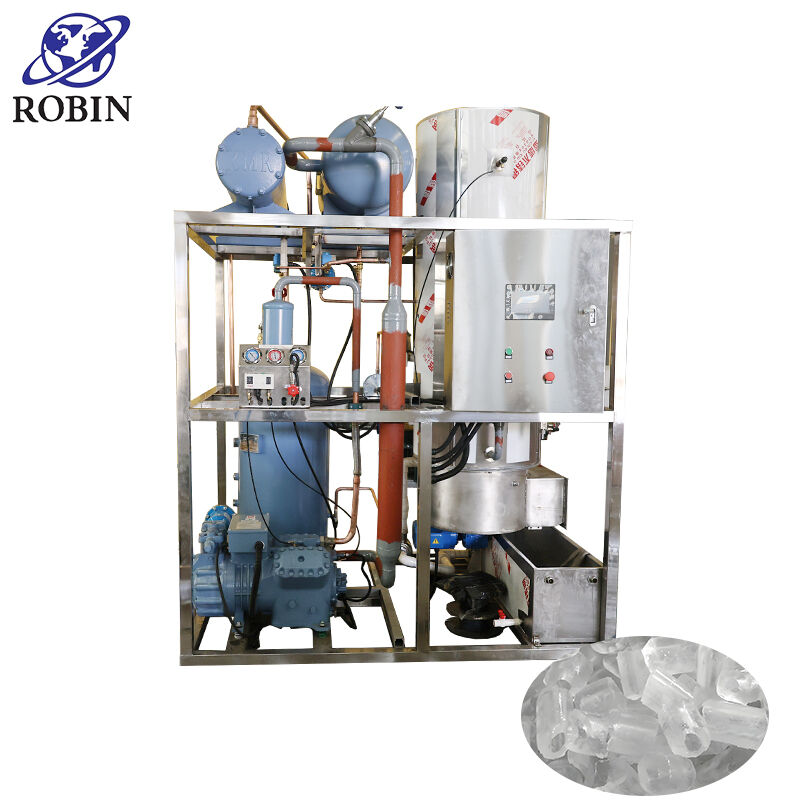
Industrial refrigeration projects demand equipment that is reliable, scalable, and capable of delivering consistent output under heavy operational pressure. Among the various ice production technologies available today, the tube ice maker machine has emerged as a preferred solution across a wide range of industries. From food processing and fisheries to chemical cooling and concrete temperature control, these machines are increasingly specified in large-scale refrigeration designs. Understanding why this technology has gained such widespread adoption requires a closer look at its engineering advantages, operational economics, and unique compatibility with industrial-grade demands.
The rise in popularity of the tube ice maker machine is not accidental. It reflects a convergence of practical engineering benefits and real-world performance characteristics that industrial buyers have come to value highly. Unlike flake or block ice systems, tube ice technology offers a distinctive combination of ice form, production efficiency, and system durability that suits projects requiring continuous, high-volume ice supply. This article explores the key reasons why the tube ice maker machine continues to dominate industrial refrigeration specifications worldwide.
The Structural Advantages of Tube Ice in Industrial Applications
Ice Form That Serves Industrial Functions
The cylindrical, hollow shape of tube ice is not merely an aesthetic distinction — it is a functional engineering choice that directly benefits industrial users. The hollow center of each ice tube allows for faster and more uniform cooling contact when the ice is applied to products or mixed into processing streams. This geometry ensures that the ice maintains its structural integrity longer than many other ice forms, reducing premature melting and improving the efficiency of the cooling process.
In fisheries and seafood processing, for example, tube ice is widely preferred because its smooth surface does not puncture or bruise delicate produce. The low surface sharpness protects the quality of packaged goods during storage and transport, which is a significant advantage over crushed or flake ice in certain product categories. Industrial operators consistently report that the physical form of tube ice matches the handling requirements of their workflows better than alternatives.
The consistent size and uniformity of tube ice also simplifies automated dispensing and conveying systems. Because each tube shares similar dimensions, chutes, augers, and storage bins can be designed with predictable flow characteristics. This uniformity reduces maintenance events caused by blockages or irregular ice accumulation, which is a common concern in continuous-process industrial facilities.
Durability and Longevity Under High-Load Conditions
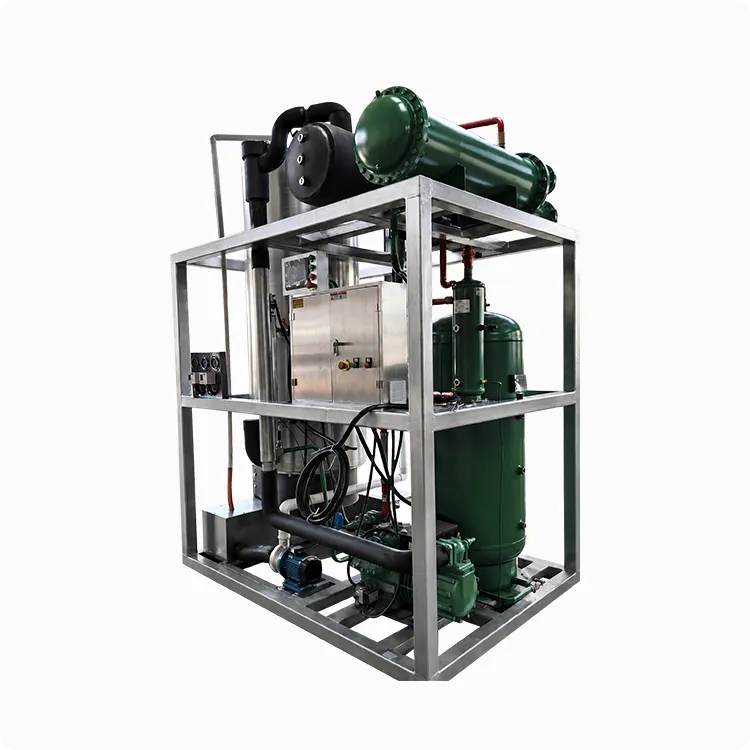
A tube ice maker machine is engineered to withstand the rigors of continuous industrial operation. The evaporator design — typically a vertical shell-and-tube heat exchanger — is robust, thermally efficient, and built to handle the thermal cycling stresses that occur in 24/7 production environments. This construction philosophy translates into lower failure rates and extended service life compared to some other ice machine categories.
The internal components of a well-engineered tube ice maker machine are selected for longevity under industrial conditions. Stainless steel water distributors, durable refrigerant circuits, and corrosion-resistant contact surfaces contribute to machines that perform reliably over years of continuous operation. For industrial project owners and facilities managers, this durability reduces unplanned downtime and total lifecycle cost, which are critical metrics in capital equipment decisions.
Furthermore, the tube ice maker machine's evaporator configuration allows for efficient defrost cycles that do not place excessive mechanical stress on the system. Ice is released cleanly through a hot-gas defrost process, which minimizes wear on moving parts and preserves the integrity of the evaporator surface over time. This operational gentleness is a meaningful contributor to the machine's long service record in demanding industrial environments.
Operational Efficiency and Energy Performance
Energy Consumption in Continuous Production
Energy efficiency is a primary concern for industrial refrigeration project managers, and the tube ice maker machine performs favorably in this regard. The vertical evaporator design promotes natural refrigerant distribution and efficient heat transfer, which allows the compressor to operate at optimal conditions. As a result, energy consumption per ton of ice produced is competitive with or better than many alternative ice production technologies at comparable output scales.
Modern tube ice maker machine designs incorporate advances such as electronic expansion valves, variable-speed compressor technology, and optimized refrigerant charge management. These features allow the machine to modulate its output in response to actual cooling demand, avoiding the energy waste associated with fixed-capacity systems that run at full load regardless of real-time requirements. For large industrial facilities with fluctuating ice demand, this adaptability translates into measurable energy savings over the course of a year.
The water efficiency of a tube ice maker machine also merits attention in industrial projects where utility costs are significant. Tube ice production uses a thin, controlled film of water over the evaporator surface, which means water consumption per unit of ice produced is relatively low. In regions where water tariffs are high or where sustainability targets are part of a facility's operational mandate, this efficiency characteristic strengthens the case for tube ice technology.
Scalability to Match Industrial Project Size
One of the strongest reasons for the popularity of the tube ice maker machine in industrial refrigeration projects is its inherent scalability. Tube ice systems are available in configurations ranging from a few tons per day to well over 100 tons per day, and multiple units can be combined in parallel to achieve even greater production capacities. This modular scalability makes it straightforward for project designers to specify equipment that matches current demand while allowing for future expansion.
Industrial refrigeration projects often evolve in stages, with initial capacity requirements that may grow substantially as a facility expands its operations. A tube ice maker machine approach allows project owners to add units incrementally rather than investing in a single large-capacity machine that may be oversized at startup. This staged investment strategy reduces initial capital outlay and provides operational flexibility that is highly valued in project financing and risk management contexts.
The standardized interfaces and utility connections typical of commercial tube ice maker machine products also simplify the integration of additional units into existing refrigeration infrastructure. Engineers can plan expansion bays with confidence that new equipment will connect seamlessly to existing ammonia or HFC refrigeration systems, electrical distribution boards, and water supply circuits. This compatibility reduces engineering complexity and accelerates project execution timelines.
Industry-Specific Suitability That Drives Adoption
Food Processing and Cold Chain Applications
The food industry represents one of the largest and most consistent markets for the tube ice maker machine. Whether in poultry processing, seafood packing, meat handling, or fresh produce cooling, tube ice provides the hygienic, food-safe cooling medium that these applications require. Tube ice produced under properly maintained sanitary conditions meets food-grade standards, and the smooth, dense structure of tube ice resists contamination pickup during handling and storage.
Cold chain logistics operators also favor the tube ice maker machine for its ability to produce ice that remains solid for extended periods during transport. The relatively dense ice tubes melt more slowly than flake or crushed ice, which means products packed with tube ice maintain their required temperature for longer during distribution. This extended holding time is particularly valuable in export fisheries and in markets where refrigerated transport infrastructure is limited.
Beverage and food service industries also rely on tube ice maker machine technology to meet consumer expectations for clarity and presentation. The hollow tube form can be produced with very high optical clarity when manufactured with properly purified water, making it attractive for premium beverage applications where ice appearance contributes to product quality perception. This crossover appeal — from industrial cold chain to premium consumer environments — is a testament to the versatility of tube ice technology.
Chemical Processing and Concrete Cooling
Beyond food applications, the tube ice maker machine has found strong adoption in chemical processing and construction sectors. In concrete cooling for large infrastructure projects such as dams, tunnels, and high-rise foundations, tube ice is mixed directly into the concrete batch to control hydration temperatures. Proper temperature management during concrete curing is critical to structural integrity, and tube ice offers a convenient, measurable, and easily dosed cooling medium for this purpose.
Chemical reaction cooling and temperature control in pharmaceutical and petrochemical processing also benefit from the characteristics of tube ice. The controlled melt rate and defined ice geometry allow process engineers to calculate cooling contributions precisely, which supports tight temperature management in exothermic reactions. The tube ice maker machine's consistent output quality gives process designers the confidence that cooling calculations will hold in actual production conditions.
Mining and mineral processing operations have similarly adopted the tube ice maker machine for dust suppression and temperature management in underground or enclosed environments. In these challenging conditions, the machine's reliable performance under varying ambient temperatures and its ability to produce large quantities of ice without complex maintenance interventions make it a practical fit for remote or difficult operating locations.
Maintenance Simplicity and Operational Reliability
Straightforward Maintenance Requirements
Industrial project managers consistently cite maintenance simplicity as a key factor in equipment selection, and the tube ice maker machine scores well on this criterion. The relatively uncomplicated mechanical design — featuring a small number of moving parts, a single evaporator circuit, and a straightforward water distribution system — means that routine maintenance can be performed by in-house technicians without the need for specialized external service providers in most cases.
Scheduled maintenance tasks for a tube ice maker machine typically include cleaning the water distribution system, inspecting refrigerant charge levels, checking electrical connections, and verifying the operation of safety controls. These tasks follow predictable intervals and can be planned during scheduled production downtime, minimizing the impact on facility output. The transparency of the maintenance schedule is a strong selling point for industrial buyers who operate under tight production commitments.
The diagnostic accessibility of the tube ice maker machine also supports proactive maintenance practices. Modern units are equipped with control panels that log operational parameters, alarm histories, and performance trends. Facilities management teams can use this data to identify developing issues before they result in unplanned stoppages, which is a significant advantage in continuous-process industrial environments where downtime carries high financial consequences.
Reliability in Demanding Environments
The track record of the tube ice maker machine in demanding industrial environments has been built over decades of real-world deployment. From tropical fisheries ports to arid mining sites and busy food processing plants, these machines have demonstrated an ability to perform consistently across a wide range of ambient conditions and operational intensities. This proven reliability gives project specifiers and facility operators the confidence to commit to tube ice technology in mission-critical refrigeration designs.
Corrosion resistance is an important reliability factor in many industrial settings, and reputable tube ice maker machine designs address this through the selection of appropriate materials for water-contact components. Stainless steel, food-grade plastics, and corrosion-resistant alloys are used where exposure to cleaning chemicals, saltwater, or aggressive process environments is anticipated. This material discipline extends service life and reduces the frequency of component replacements, further supporting the total cost case for tube ice technology.
Industrial users also appreciate that spare parts for the tube ice maker machine are widely available through manufacturer networks and local refrigeration supply chains. The maturity of this technology category means that replacement components are not exotic or difficult to source, which reduces the risk of extended downtime due to parts availability issues. This supply chain accessibility is a practical but often underappreciated advantage that strengthens the operational case for tube ice technology in geographically diverse industrial projects.
FAQ
What capacity range is typical for an industrial tube ice maker machine?
Industrial tube ice maker machine systems are available across a wide capacity range, typically from around 1 ton per day for smaller applications up to 100 tons per day or more for large industrial projects. For very high-capacity requirements, multiple units can be installed in parallel, making it possible to design a total system output that matches virtually any industrial demand level. The choice of unit size depends on peak demand calculations, available utilities, and the operational model of the facility.
Is a tube ice maker machine suitable for outdoor installation in hot climates?
Yes, tube ice maker machine units can be configured for outdoor or semi-outdoor installation in hot and humid climates. The refrigeration system must be appropriately sized to account for elevated ambient temperatures, and the condenser type — whether air-cooled or water-cooled — should be selected based on local climate and utility availability. Water-cooled condensers generally perform more consistently in very hot conditions, while modern air-cooled designs have also improved significantly in high-temperature performance. Proper shading and ventilation of the installation area further supports reliable operation in challenging climates.
How does the tube ice maker machine compare to flake ice machines for industrial food processing?
Both tube ice and flake ice have distinct advantages depending on the specific food processing application. Tube ice is preferred where longer holding times, product protection from sharp ice edges, and resistance to clumping during storage are important. Flake ice, being thinner and with greater surface area, provides faster initial chilling contact and is often chosen for direct product burial or display. Many industrial facilities use tube ice maker machine systems when the primary need is bulk cooling, preservation during transport, and process water cooling, while flake ice may be preferred for immediate rapid chilling applications at the point of processing.
What refrigerants are compatible with a tube ice maker machine?
The tube ice maker machine is compatible with a range of refrigerants used in industrial refrigeration. Ammonia (R717) is widely used in large industrial tube ice systems due to its excellent thermodynamic properties and low environmental impact in terms of global warming potential. HFC refrigerants such as R404A and R507 are also used, particularly in smaller or medium-scale commercial applications, though regulatory trends are encouraging transition toward lower-GWP alternatives. Natural refrigerants including CO2 (R744) are also being explored in next-generation tube ice maker machine designs as the industry responds to environmental regulations and sustainability commitments.
Table of Contents
- The Structural Advantages of Tube Ice in Industrial Applications
- Operational Efficiency and Energy Performance
- Industry-Specific Suitability That Drives Adoption
- Maintenance Simplicity and Operational Reliability
-
FAQ
- What capacity range is typical for an industrial tube ice maker machine?
- Is a tube ice maker machine suitable for outdoor installation in hot climates?
- How does the tube ice maker machine compare to flake ice machines for industrial food processing?
- What refrigerants are compatible with a tube ice maker machine?