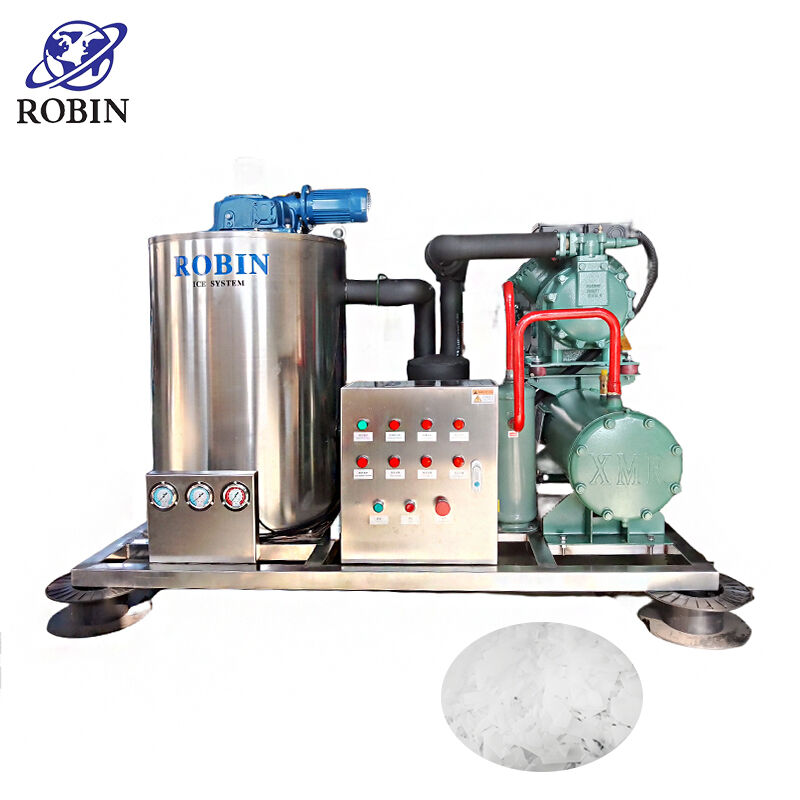
Superior Ice Quality Characteristics Enhancing Product Preservation and Handling Efficiency
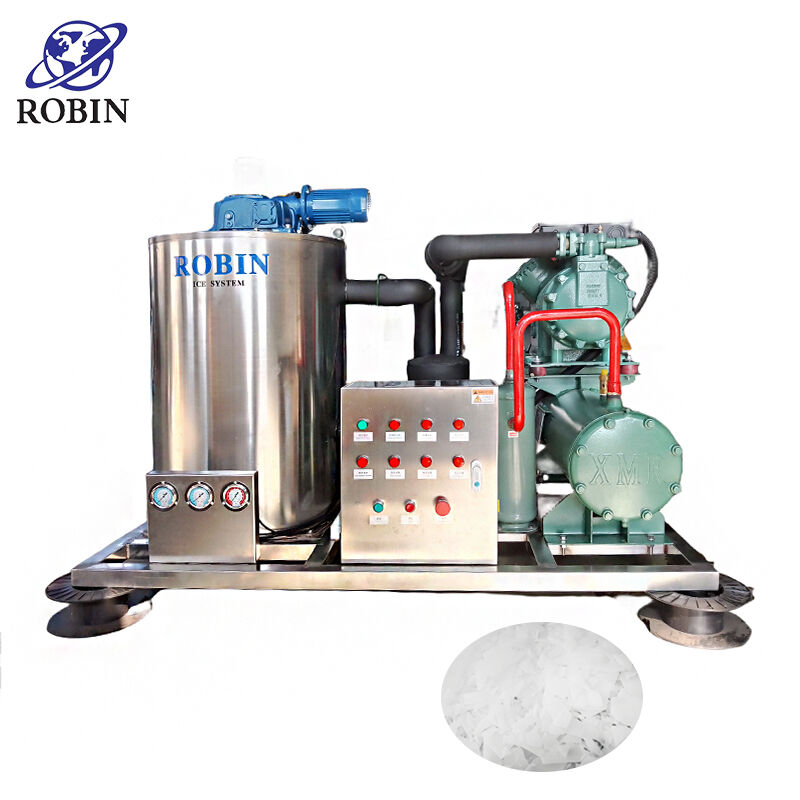
The flake ice produced by commercial sea water flake ice machines exhibits unique physical characteristics that deliver measurable advantages in seafood preservation, handling efficiency, and product quality maintenance compared to alternative ice formats. The thin, flat crystal structure, typically measuring 1-2 millimeters in thickness with irregular geometric shapes, creates an exceptionally high surface-area-to-volume ratio that accelerates heat transfer during cooling applications. This rapid cooling capability proves critical in seafood processing where minimizing the time between harvest and temperature reduction directly correlates with final product quality and shelf life. The flake format conforms readily to irregular product shapes, filling voids and creating intimate contact with fish surfaces, shellfish, and other marine products regardless of their geometry. This conformability ensures uniform cooling without creating pressure points that could damage delicate flesh or compromise product appearance. The dry texture of properly produced flake ice, containing minimal free moisture, prevents the clumping and fusion that occurs with wetter ice types, maintaining free-flowing characteristics that simplify handling and distribution throughout processing facilities. Workers can easily scoop, spread, and pack the ice around products without encountering frozen masses that require breaking apart, improving operational efficiency and reducing physical strain. The subcooling effect achieved when seawater ice contacts freshwater fish creates an enhanced preservation environment, as the lower freezing point of the saline ice draws heat more aggressively from the product surface. This phenomenon contributes to faster core temperature reduction and improved quality retention during the critical initial cooling phase. The commercial sea water flake ice machine produces ice with consistent thickness and texture, eliminating the quality variations that can occur with less sophisticated ice-making technologies. This consistency allows processors to develop standardized handling procedures and accurate ice-to-product ratios for optimal preservation results. The flake format also provides superior visual presentation when displaying seafood products, as the small crystals create an attractive bed that showcases the product while maintaining the necessary cooling function. Melting characteristics of flake ice prove advantageous in processing environments, as the thin crystals transition to liquid state gradually and uniformly, providing sustained cooling throughout handling and transportation cycles. The increased surface area that benefits heat transfer also facilitates faster melting when desired, such as during final product rinsing or when ice must be removed before packaging operations. Storage efficiency represents another practical advantage, as flake ice packs densely in insulated bins, maximizing storage capacity within limited facility space. The ice remains accessible throughout the storage period, with users able to extract required quantities without disturbing the entire inventory. Quality consistency extends to the ice's temperature uniformity, with the commercial sea water flake ice machine producing crystals at consistent temperatures throughout production runs, eliminating hot spots or temperature variations that could compromise preservation effectiveness.

 EN