
 EN



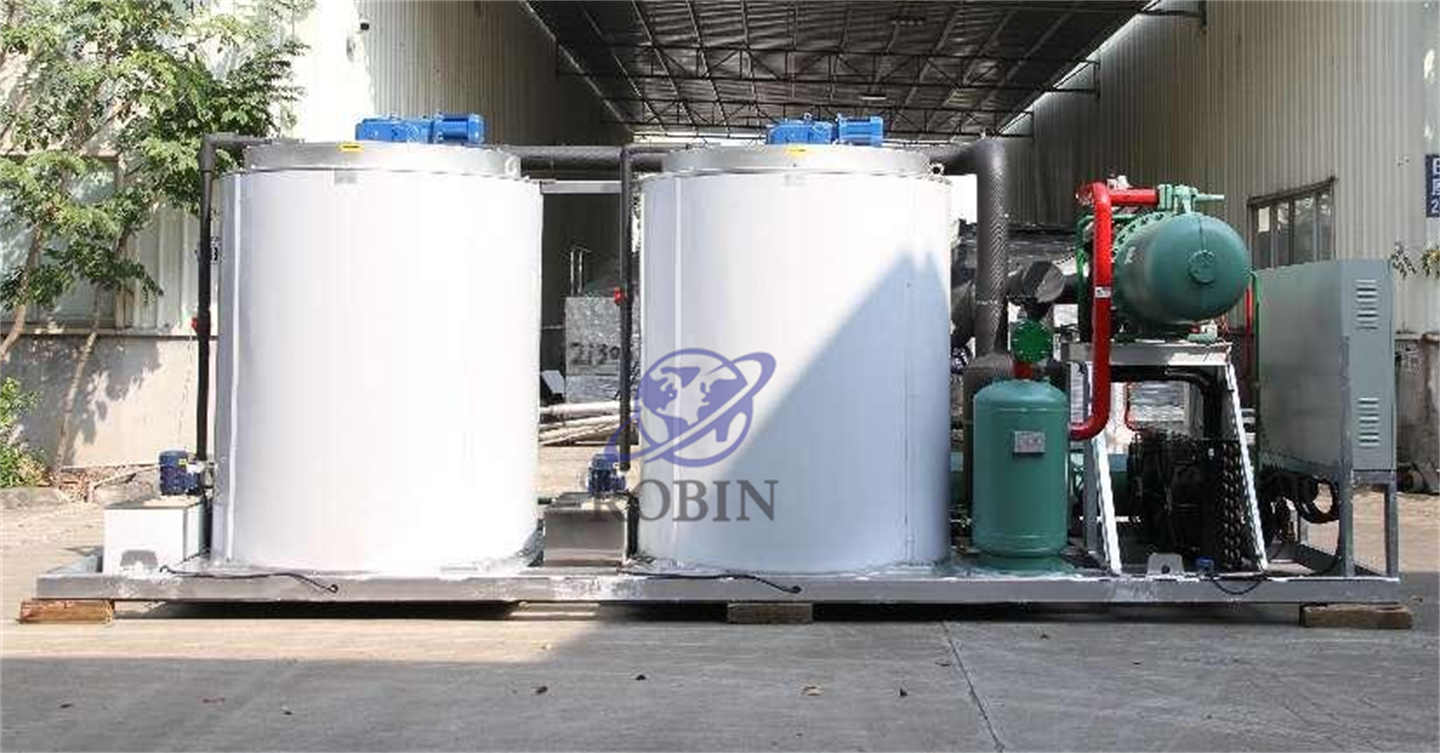
Large industrial cooling applications demand reliable, scalable solutions that can handle continuous operation under demanding conditions. A flake ice evaporator represents a modern approach to thermal management, combining ice generation with evaporative cooling principles to deliver efficient temperature control across manufacturing, food processing, chemical production, and other heat-intensive industries. Understanding whether a flake ice evaporator suits your specific cooling needs requires examining its operational capacity, efficiency metrics, installation requirements, and performance under real-world industrial loads.
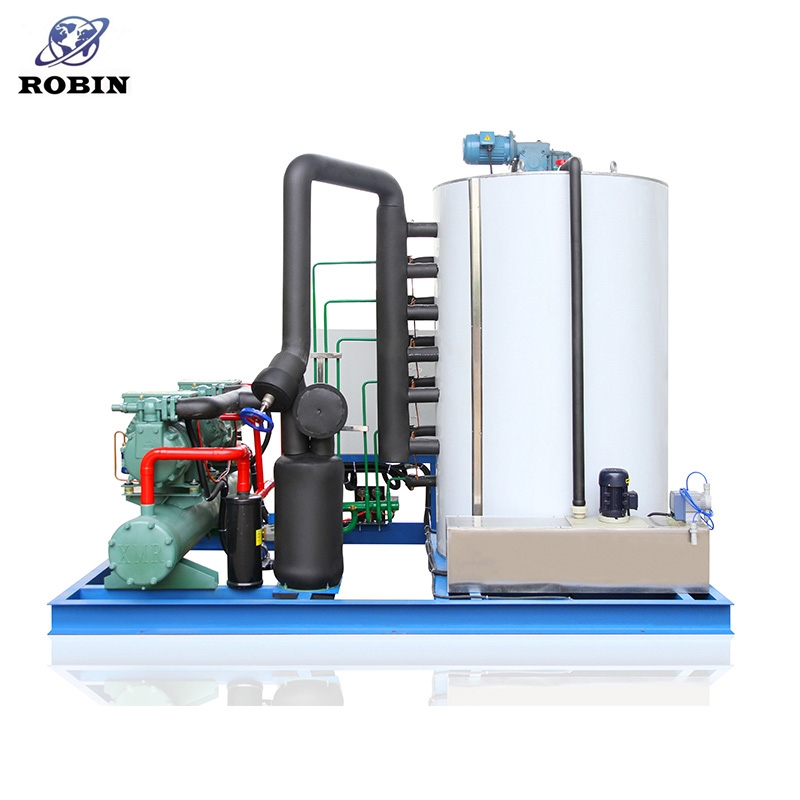
The suitability of a flake ice evaporator for large industrial cooling applications depends on multiple interconnected factors including your facility's thermal load, existing infrastructure, production schedules, and budget constraints. This article explores the technical capabilities of flake ice evaporator systems, evaluates their performance across various industrial sectors, and provides practical guidance for determining whether this technology aligns with your cooling strategy.
Understanding Flake Ice Evaporator Capacity and Performance
Thermal Output and Scalability
A flake ice evaporator generates cooling capacity by producing flake ice and utilizing latent heat exchange during phase transition. Modern flake ice evaporator units can produce between 5,000 and 100,000 kilograms of flake ice daily, depending on machine configuration and ambient conditions. This modular capacity makes a flake ice evaporator exceptionally scalable for large industrial applications, as facilities can install multiple units in parallel to achieve required cooling loads without replacing entire systems. The distributed architecture of a flake ice evaporator also enhances operational resilience, allowing partial system shutdown for maintenance while maintaining baseline cooling capacity.
Cooling Efficiency and Energy Consumption
Energy efficiency remains critical for large industrial operations where cooling costs directly impact profitability. A flake ice evaporator typically operates with coefficient of performance (COP) values between 3.5 and 5.5, translating to approximately 1 kilowatt of cooling capacity per kilowatt of electrical input across diverse operating conditions. This efficiency advantage positions a flake ice evaporator competitively against traditional chiller systems, particularly in facilities where ice storage provides temporal load shifting benefits. The flake ice evaporator design minimizes refrigerant cycling losses through optimized heat exchanger geometry and reduced superheat requirements compared to conventional evaporators.
Application Suitability Across Industrial Sectors
Food Processing and Cold Chain Industries
Food processing facilities represent ideal applications for a flake ice evaporator deployment. These environments require precise temperature maintenance for product preservation, and a flake ice evaporator delivers controllable cooling with direct ice contact capability for rapid temperature reduction. Seafood processing, meat processing, and produce cooling operations benefit significantly from flake ice evaporator systems because the flake format facilitates rapid heat transfer while maintaining product quality. The hygiene profile of a flake ice evaporator can meet stringent food safety standards when properly integrated with validated cleaning protocols, making this technology particularly valuable in regulated food production environments.
Chemical and Petrochemical Process Cooling
Chemical manufacturing often demands precise temperature control during exothermic reactions and sensitive processing stages. A flake ice evaporator serves these applications effectively by providing both direct cooling through ice addition and indirect cooling through integrated heat exchanger circuits. Process reactors, distillation columns, and crystallization vessels benefit from the flexible cooling approach that a flake ice evaporator enables. The ability to rapidly adjust cooling output through ice production rate modulation allows operators to maintain tight temperature tolerances without the lag time characteristic of traditional chilled water systems, demonstrating why a flake ice evaporator represents a capable solution for chemical process cooling.
Pharmaceutical Manufacturing and Laboratory Facilities
Pharmaceutical production environments impose strict cleanliness and traceability requirements that a flake ice evaporator can satisfy through proper system design and monitoring. Temperature-sensitive drug formulation, biotech processing, and laboratory-scale cooling applications leverage the compact footprint and precise control that a flake ice evaporator provides. The non-contact cooling option available in advanced flake ice evaporator configurations prevents product contamination risks while delivering required thermal management, addressing a critical concern in regulated pharmaceutical environments.
Installation, Integration, and Operational Considerations
Infrastructure Requirements and Retrofit Compatibility
Deploying a flake ice evaporator in existing industrial facilities requires assessment of water supply quality, drainage capacity, electrical infrastructure, and spatial constraints. A flake ice evaporator demands reliable cooling water supply for condenser operation and sufficient drainage for ice melt and washdown procedures. Most large industrial facilities possess adequate utilities to support a flake ice evaporator installation, though some retrofit projects may require water treatment upgrades or drainage system modifications. The modular design of modern flake ice evaporator equipment simplifies integration into existing cooling loops, enabling phased deployment strategies that minimize production disruption during transition from legacy cooling technology.
Maintenance Requirements and System Reliability
Operational reliability hinges on proper maintenance practices that preserve flake ice evaporator performance throughout its service life. Regular inspection of flake ice evaporator components including the evaporator drum, refrigerant circuits, ice harvesting mechanisms, and water distribution systems prevents equipment degradation and extends equipment lifespan. The flake ice evaporator design incorporates fewer moving parts than some alternative cooling technologies, reducing failure risk and simplifying preventive maintenance protocols. Scheduled maintenance intervals for a flake ice evaporator typically occur quarterly or semi-annually depending on operating hours and ambient conditions, representing manageable commitments for large industrial operations with established maintenance departments.
Cost Analysis and Return on Investment
Capital Investment and Operating Expense Structure
Initial capital expenditure for a flake ice evaporator installation ranges widely based on cooling capacity, refrigeration system complexity, and site-specific integration requirements. Large industrial facilities should expect capital costs between $150,000 and $500,000 for single-unit flake ice evaporator systems capable of serving substantial thermal loads. Annual operating expenses primarily consist of electrical consumption for compressor operation, refrigerant replacement, water treatment chemicals, and routine maintenance labor. The total cost of ownership for a flake ice evaporator typically shows favorable comparison against alternative cooling technologies when evaluated over ten-year operational horizons, particularly in applications where ice storage provides load-shifting benefits or where the flake ice evaporator displaces multiple smaller cooling units.
Performance Metrics and Productivity Gains
Quantifying flake ice evaporator value requires measuring not only energy efficiency but also product quality improvements, production throughput gains, and process stability enhancements. Facilities that implement a flake ice evaporator for temperature-critical processes often report reduced product loss, faster cycle times, and improved consistency compared to preceding cooling approaches. These operational benefits frequently translate to net cost recovery within three to five years, offsetting the capital investment through improved throughput and quality metrics specific to individual industry applications where a flake ice evaporator proves particularly effective.
FAQ
Can a flake ice evaporator operate continuously in large industrial facilities?
Yes, a flake ice evaporator is designed for continuous industrial operation. The flake ice evaporator architecture supports 24/7 production cycles with appropriate maintenance intervals and refrigerant monitoring. Large industrial facilities typically operate flake ice evaporator systems continuously, modulating ice production output to match cooling demand rather than cycling equipment on and off, which enhances energy efficiency and equipment longevity.
What cooling capacity should a large industrial facility specify for a flake ice evaporator?
Flake ice evaporator sizing requires calculating total facility thermal load including process heat generation, ambient infiltration, and peak simultaneous cooling demand. Most large industrial applications benefit from sizing a flake ice evaporator at 110–125% of calculated baseline load to accommodate unexpected thermal transients and maintain system headroom. Consulting with specialized cooling engineers ensures that the selected flake ice evaporator capacity aligns with actual facility requirements while avoiding undersizing that compromises performance or oversizing that increases unnecessary capital expense.
How does a flake ice evaporator compare to traditional chiller systems for large industrial use?
A flake ice evaporator offers advantages over traditional chillers in energy efficiency, direct cooling capability, and thermal storage flexibility. However, traditional chiller systems may prove more suitable for applications requiring ultra-precise temperature control or extensive building HVAC integration. The flake ice evaporator excels in applications where ice storage provides temporal load shifting or where direct ice contact enhances product quality, while conventional chillers remain optimal for applications demanding centralized chilled water distribution to numerous terminal points throughout a facility.