
 EN



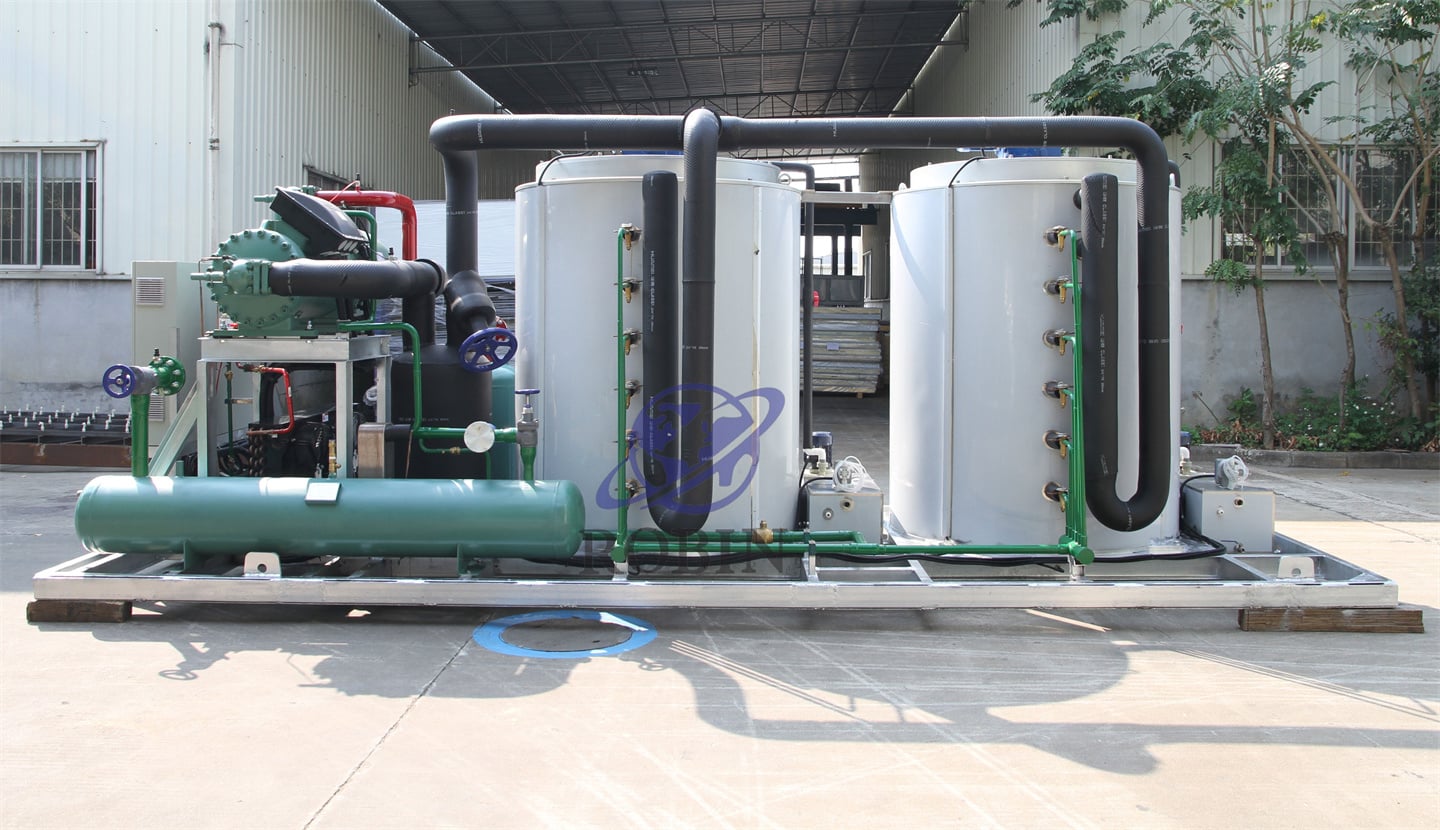
The flake ice evaporator represents a critical component in modern continuous refrigeration systems, enabling facilities to maintain precise temperature control while optimizing energy consumption across industrial operations. Understanding how a flake ice evaporator functions within a broader refrigeration network is essential for operators seeking to maximize uptime and minimize operational costs in demanding environments where thermal stability directly impacts product quality and process reliability.
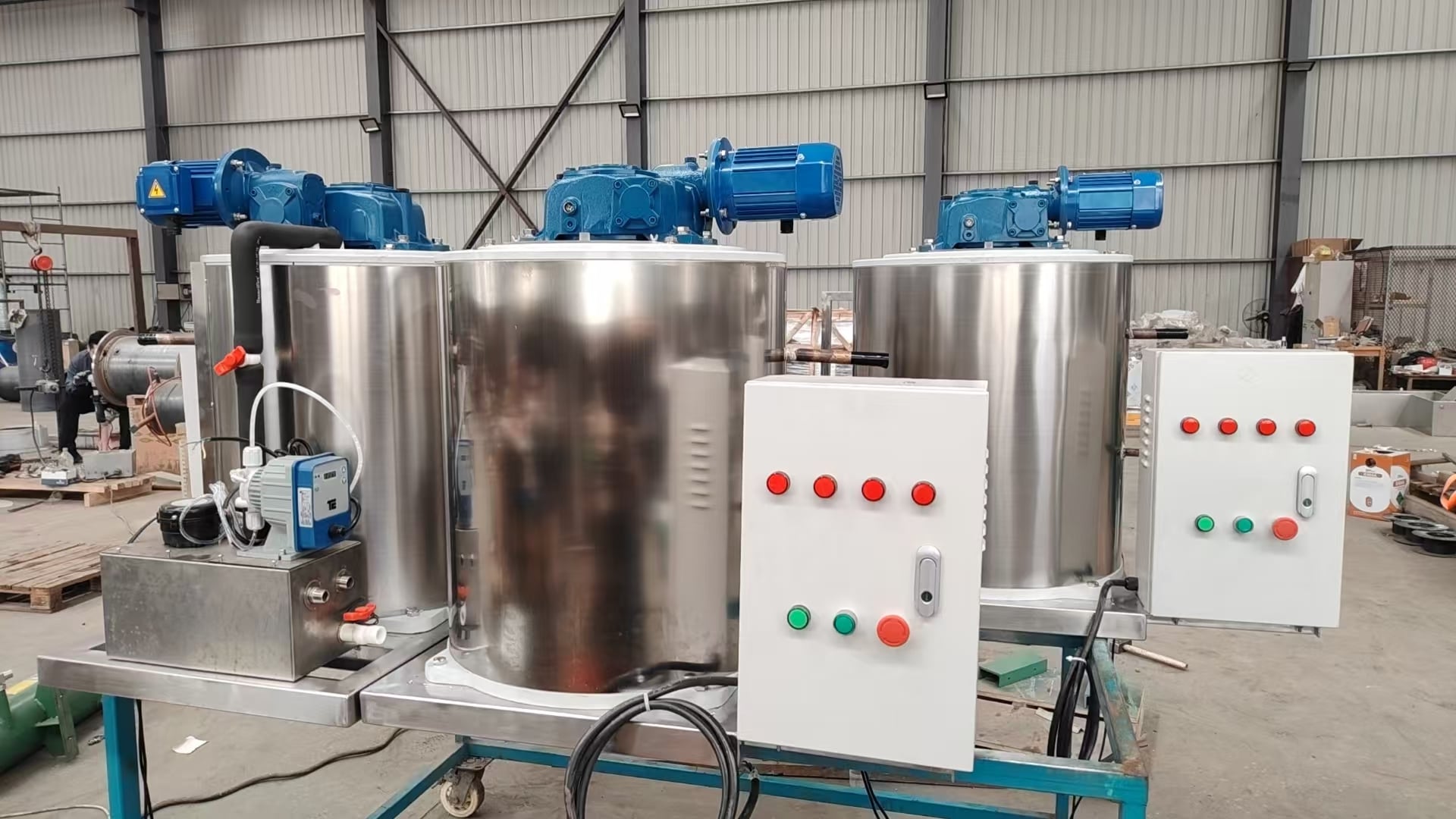
A flake ice evaporator continuously produces finely fragmented ice crystals that serve dual purposes within refrigeration operations: they act as both a direct cooling medium and as a thermal buffer that stabilizes temperature fluctuations inherent in industrial processes. The sophisticated design of a flake ice evaporator allows it to integrate seamlessly into existing refrigeration infrastructure, providing operators with flexible cooling capacity that adapts to variable processing demands without requiring constant system recalibration.
Thermal Transfer Mechanism and Heat Absorption
Ice Crystal Formation and Energy Exchange
The flake ice evaporator works through a highly efficient thermal transfer mechanism where refrigerant circulates through metal tubing immersed in water, causing rapid crystallization and ice formation on the evaporator walls. As the flake ice evaporator continuously harvests freshly formed ice crystals, each particle carries substantial latent heat capacity, meaning that when introduced into a process stream or storage system, the ice absorbs significant thermal energy as it transitions from solid to liquid state. This phase-change cooling characteristic makes the flake ice evaporator exceptionally efficient because it absorbs heat energy over an extended temperature plateau rather than causing dramatic temperature swings that stress product integrity and equipment performance.
The flake ice evaporator design optimizes surface area contact between refrigerant and water, enabling rapid and controlled ice nucleation that produces uniform crystal sizes and consistent cooling capacity. Operators can calibrate the flake ice evaporator to produce ice particles within specific diameter ranges, allowing precision matching to application requirements ranging from delicate pharmaceutical cooling to aggressive industrial process temperature management. This adaptability means that the flake ice evaporator delivers predictable thermal output that simplifies system modeling and enables reliable production scheduling across multiple shifts.
Continuous Circulation and System Integration
Within a continuous refrigeration operation, the flake ice evaporator serves as the primary production hub that generates cooling capacity on demand rather than relying on static ice storage that degrades over time through sublimation and thermal bridging. The flake ice evaporator connects to distribution systems that transport freshly produced ice to multiple process points simultaneously, maximizing cooling efficiency by minimizing travel distance and transit time for ice particles. This distributed cooling architecture, centered around the flake ice evaporator as the production source, eliminates idle cooling capacity and reduces the dimensioning burden on primary refrigeration compressors by offloading peak thermal demands to the immediate cooling effect of phase-change ice transitions.
The flake ice evaporator operates as an intermediate cooling stage positioned between the primary refrigeration compressor and final process applications, functioning as both a thermal buffer and a flexible load manager. When facility cooling demand spikes unexpectedly, the flake ice evaporator can increase ice production rates within seconds, providing immediate supplemental cooling capacity without forcing the main compressor into inefficient high-speed operation. Conversely, during lower-demand periods, the flake ice evaporator can reduce production or operate in maintenance mode, allowing the refrigeration system to coast at optimal efficiency levels while maintaining ice inventory for subsequent demand surges.
Operational Continuity and System Reliability
Uninterrupted Cooling Delivery
A flake ice evaporator maintains continuous refrigeration operations by decoupling production from instantaneous demand, creating an ice inventory buffer that ensures cooling availability even during temporary compressor cycling or maintenance intervals. This operational characteristic proves invaluable in industries such as food processing, pharmaceutical manufacturing, and chemical production, where unexpected temperature excursions can destroy inventory, compromise sterility, or disrupt batch integrity. The flake ice evaporator provides a cooling safeguard that persists independently of real-time refrigeration system status, allowing controlled shutdown sequences and scheduled equipment maintenance without subjecting products to thermal stress.
The flake ice evaporator's distributed architecture eliminates single-point-of-failure vulnerability inherent in traditional liquid refrigeration systems where compressor malfunction immediately halts all cooling capacity. By maintaining fresh ice reserves at multiple process locations, the flake ice evaporator enables continued operations for several hours to days depending on ambient conditions and process thermal loads. This resilience proves economically critical in high-value manufacturing where each minute of thermal interruption translates directly to lost revenue, increased scrap rates, or safety protocol violations.
Energy Efficiency and Cost Performance
The flake ice evaporator achieves superior energy efficiency compared to direct liquid refrigerant cooling systems because it leverages the massive latent heat absorption capacity of phase-change ice transitions to accomplish cooling work at lower compressor discharge pressures. Since the flake ice evaporator operates at temperatures significantly above absolute zero, the refrigeration compressor can run at more moderate pressure ratios, consuming less electricity per unit of thermal energy removed from processes. Industrial operators utilizing a flake ice evaporator typically observe 15 to 25 percent reduction in compressor energy consumption relative to equivalent cooling capacity delivered through traditional direct-expansion refrigeration architectures.
Beyond compressor efficiency gains, the flake ice evaporator reduces auxiliary energy costs by eliminating expensive liquid refrigerant distribution infrastructure, pump horsepower requirements, and insulation demands associated with maintaining subfreezing temperatures throughout extended piping networks. A flake ice evaporator produces locally and distributes solid cooling capacity, reducing thermal losses inherent in long-distance refrigerant transport and enabling smaller, less energy-intensive distribution systems. These compounding efficiency advantages position the flake ice evaporator as the economically optimal choice for industrial facilities seeking to minimize long-term operational expense while maintaining reliable continuous refrigeration capability.
Maintenance Integration and System Flexibility
Scheduled Equipment Service Without Production Stoppage
The flake ice evaporator enables facilities to execute scheduled maintenance on primary refrigeration compressors, heat exchangers, and auxiliary equipment without interrupting production cooling, a capability that fundamentally transforms operational planning for continuous-process industries. Maintenance technicians can confidently begin compressor overhauls knowing that accumulated ice inventory from the flake ice evaporator will sustain adequate cooling capacity for 8 to 12 hours, providing sufficient window for most routine service tasks. The flake ice evaporator thus transforms maintenance from a disruptive facility-wide shutdown event into a managed operation that minimizes lost production time and associated inventory spoilage or quality degradation.
This maintenance flexibility granted by the flake ice evaporator directly improves overall equipment effectiveness and asset lifespan because technicians can follow best-practice service procedures without artificial time pressure or compressed work schedules. When maintenance work proceeds deliberately and thoroughly rather than under crisis urgency, technician safety improves, workmanship quality increases, and premature component failure rates decline. The flake ice evaporator thus contributes to facility safety culture and long-term capital asset management beyond its immediate thermal function.
Adaptive Capacity Scaling for Variable Demand
Industrial processes rarely operate at constant thermal loading throughout production cycles, yet traditional refrigeration systems must be sized for peak demand and waste energy during lower-load periods. The flake ice evaporator solves this mismatch by enabling compressor operation at consistently high efficiency levels while the flake ice evaporator itself varies ice production rates to match actual facility cooling requirements. This adaptive capacity allows the flake ice evaporator to consume less energy than fixed-capacity refrigeration systems while simultaneously delivering higher cooling reliability through buffer inventory management.
Operators can progressively scale their facility thermal capacity by adding additional flake ice evaporator modules as production volumes increase, avoiding the capital expense of oversizing refrigeration infrastructure at facility inception. Each flake ice evaporator module operates independently yet contributes to collective system resilience, meaning that loss of one unit degrades rather than eliminates facility cooling capability. This modular scalability characteristic makes the flake ice evaporator the preferred choice for growth-oriented facilities that anticipate expanding production scope and thermal requirements over multiyear planning horizons.
FAQ
How does a flake ice evaporator differ from traditional liquid refrigeration systems?
A flake ice evaporator produces solid ice particles that deliver cooling through phase-change energy absorption, whereas liquid refrigeration systems circulate subfreezing liquids through process equipment. The flake ice evaporator enables buffer inventory creation, allowing continued operations during compressor maintenance or malfunction, whereas liquid systems stop cooling immediately if the compressor fails. Additionally, the flake ice evaporator typically operates at higher evaporator temperatures, enabling more efficient compressor operation and lower energy consumption than equivalent direct-expansion systems.
What industries benefit most from continuous refrigeration operations supported by flake ice evaporator technology?
Food processing facilities, pharmaceutical manufacturers, chemical production plants, and seafood handling operations derive substantial benefit from flake ice evaporator cooling systems because these industries cannot tolerate thermal interruptions without incurring significant product loss or safety compliance violations. The flake ice evaporator provides the reliable, continuous cooling these sectors require while delivering energy efficiency advantages and maintenance flexibility that reduce overall operational cost. Temperature-sensitive manufacturing environments particularly value the thermal stability and precise control that a well-designed flake ice evaporator system delivers.
Can a flake ice evaporator be retrofitted into existing refrigeration infrastructure?
Many existing refrigeration systems can be retrofitted with a flake ice evaporator by integrating it as an intermediate cooling stage between the primary compressor and existing process equipment, though specific compatibility depends on facility layout, available electrical capacity, and installation space constraints. Retrofit projects typically require consultation with refrigeration engineers to assess existing system capacity, compressor capabilities, and thermal requirements to ensure that the flake ice evaporator addition delivers anticipated efficiency and reliability benefits. Most modern facilities find that retrofitting a flake ice evaporator provides compelling return-on-investment through reduced energy consumption and improved operational resilience.